Australia Lesson Activities - Environmental Studiestag:www.expedition360.com,2007:/australia_lessons_environmental//252007-04-27T08:36:02ZEnvironmental Study lessons sent from the Outback by the Overland Australia team of Expedition 360 for use by classrooms worldwide free of charge.Movable Type 3.35Water Storage and the Furphy’s Tanktag:www.expedition360.com,2001:/australia_lessons_environmental//25.9152001-10-15T08:32:50Z2007-04-27T08:36:02ZTHEME: Pine Creek SUBJECT AREA: Environment TOPIC: Furphy’s 2001 October 15, Monday. North of Pine Creek. You should have seen us the first time we saw natural running water after the Tanami Desert, near Kalkaringi. Hooting like fools we wallowed...jasonwww.expedition360.com
So as a pioneer, how could you avoid this natural environmental hazard? By storing your water away from its source. The Furphy brothers Farm Water Cart, manufactured and used in South Eastern Australia for filling troughs for livestock and watering gardens, was used throughout the country for various agricultural and domestic purposes. The typical example shown in our photograph was manufactured in Shepparton, Victoria, in 1942, and brought to Pine Creek perhaps via the Ghan train line.
The overland transportation of such large pieces of iron is yet another amazing colonial exploit, akin to that of the flywheel we saw at the historic Mount Molloy timber mill, Cape York, which had been cast in Illinois, USA, around the turn of the century. See today’s LITERACY update for details on the cast iron ends and their hidden message.
Suggested learning activities: Identify a natural hazard in your home area, either current or historical. How have people learned to live with it, or adapted to it? Identify places where the natural dangers are too great for humans to inhabit them. What makes these places dangerous? How could humans learn to cope with the dangers by using technology? Are the hazardous places functioning eco-systems without human habitation, or are they desertified places, uninhabitable because of pollution, or previous human misuse?
bel
]]>
Crocs!tag:www.expedition360.com,2001:/australia_lessons_environmental//25.9122001-10-14T08:12:02Z2007-04-27T08:15:34ZTHEME: Road Trains SUBJECT: Environmental Studies TOPIC: CROCS! Of all the creatures team members were most concerned about when they first started this trip, saltwater crocodiles had to be the most talked about. “What do you do if you get...jasonwww.expedition360.com
This morning we were told by one of the contract musterers (they gather cattle together for stations on a contract basis) camped on the river beside the mangled wreckage of the road train that they’d seen a 14ft crocodile the previous evening just upstream of the accident site. “He’ll be attracted to the smell in the water of the dead cattle” he continued. “Give it another week and this whole area will be stiff with crocs I reckon”. This gave us little reassurance for crossing the river this morning with our bikes, expecting some giant monster to come lunging out of the deep at us any time. But putting our emotions aside for a minute, lets take a slightly closer look at the biology of crocodiles and what makes them one of the more extraordinary animals we’ve come across on the trip so far.
The Latin name for the salt-water variety is Crocodylus porosus. One big difference from their freshwater cousins (see yesterday’s general update) is the stubby snout and considerably stouter frame. Saltwater crocs can also grow up to 7m in length as opposed a maximum of around 3m for the ‘freshies’ and are quite capable of attacking and eating humans, whereas ‘freshies’ won’t unless seriously provoked.
Being a reptile, crocodiles are ‘cold-blooded’ relying upon the heat of the sun for their body warmth. This is why you can very often see them basking on riverbanks in the daytime. If they get too hot, they can slip into the water to cool off. They do not have any of the sophisticated body temperature regulation systems that mammals have for example (see suggested learning activities below). At this time of year many crocs are hibernating. Their main time for feeding and activity in general is during the wet season.
They have a keen sense of smell, as displayed by the 14ft one the musterer saw last night, and can be attracted from several miles downstream by a wounded animal. (The musterer also told us how when the centre of the town of Katherine was flooded last year, a 20ft croc was seen heading down the main street in the direction of the butcher’s shop!)
As well as rivers, like the Daly River on which the road train disaster happened, saltwater crocodiles inhabit coastal estuaries, swamps and may be seen swimming out to sea, but also dwell in billabongs (a large pool of water) and pools well inland, which they reach by river systems during periods of flood and also by limited overland excursions.
In the spring, females will lay 30-80 hard-shelled eggs in a nest created from soil, vegetation and debris located on a riverbank or side of a billabong. She will defend the nest aggressively until such time as the babies hatch, at which point she will carry the hatchlings to the water in her mouth, trying not to swallow any along the way of course!
As with snakes, crocodiles have a ‘bad rap’ with people due to the ferocious ‘monster’ image we have fixed in our psyche and which is reinforced in films and by the media in general. But statistically, one is far more likely to come foul of an automobile accident. In 1986, for example, 2, 873 Australians died in automobile related accidents. Four people died as a result of attacks by crocodiles during the 4-year period between 1982-86.
Suggested learning activities: find out more about the how reptiles, and crocodiles in particular, regulate their body heat. Compare and contrast their body cooling system to that of a warm-blooded animal, like humans for example. List the main differences. Find out more about a particular physiological feature of crocodiles that interest you most.
]]>
Termitestag:www.expedition360.com,2001:/australia_lessons_environmental//25.9092001-10-11T07:51:33Z2007-04-27T07:56:23ZTHEME: Creepy Crawlies SUBJECT: Environment TOPIC: Termites 2001 October 11, Thursday. Innesvale Station. While ecosystems and their inhabitants have come and gone, one feature of the landscape has been our constant companion since we left the beach at the Starcke...jasonwww.expedition360.com
While ecosystems and their inhabitants have come and gone, one feature of the landscape has been our constant companion since we left the beach at the Starcke eighty days ago. From big enough to climb upon for a 360 degree view, to dainty enough to be knocked over by a wayward cyclist (cheap imported rubbish, falling apart . . .); from the red of the Tanami, to the grey of the ranges; from lumpy and dumpy, to tall and fluted – they have been ever-present and infinitely fascinating.
In fact, the more we learn about termite mounds and their bite-size inhabitants, the more enraptured we become. More so perhaps than Verna Kruckow, our unimpeachable hostess back at Pinnacle Springs Station, who has to share her house with them. We haven’t yet tired of their presence, however, as they keep mostly to themselves, and we’re too busy dealing with blow flies. Here are some terrific facts you mightn’t know about the tincy little things which cover most of the Northern Territory:
*It is unusual for termites to be active in the daytime. This is because their soft bodies cannot prevent water loss enough to survive in the sun’s heat.
*Sometimes, geckos lay their eggs inside termite mounds.
*Golden-shouldered Parrots, Hooded Parrots and the extinct Paradise Parrot build their nests in the mounds, and feed on the seeds of native grasses.
*The fact that there are millions of termites has allowed lizards to become very abundant. More lizards eat termites than anything else.
*Soldier termites have armoured heads and large jaws ready to attack anything which threatens the colony.
*Tens of thousands, and sometimes millions of termites inhabit each nest. There are so many that of you weighed all of the termites in one area they would weigh more than all the kangaroos in the same area.
*All the members of a colony continually exchange food and saliva with one another. These substances have chemicals in them which communicate messages to the whole colony. Each termite colony has a distinctive odour.
*Somewhere in the termite nets is a queen ant, gigantic in comparison with the other termite workers who feed and tend to her needs.
*All of the three genera of ants are found in Australia.
*The Tanami Desert has eight hundred termite mounds per hectare.
*Termites collect water from the soil, tunnelling to depths of up to one hundred metres, to raise the humidity within the mounds. The galleries of most termite mounds have relative humidities of close to ninety-five per cent.
*The pregnant abdomen of the queen is swollen to many times the size of one of her attendants. She is the only mother amongst the thousands of termites and her sole job is to lay eggs, which she does continually.
*Termites eat cellulose – the hard part of plants, such as the trunks of trees and the hard spiky leaves of spinifex. Because hardly any other animal can eat this, termites have an abundant supply of food. They also eat animal dung.
*Ants are one of the most diverse genus of multi-celled organisms in the world, along with Acacia Trees, and Dung Beetles.
*There are often openings in the ground at the base of a spinifex clump. These are entrances to the termite nest, highways leading into an underground metropolis of ants, and are the reason termites are rarely seen around the mounds.
*Ants survive in Arid Australia at ground temperatures of over sixty-five degrees centigrade.
Suggested learning activities:
Try to find answers to as many of the following questions as you are able. Be creative – visit the school library, ask your teachers and parents, check the internet – you might even find some of the answers in this update . . .
How do termites differ from ants?
Who are the termites main predator?
How big can an ant grow?
How far does termite mound covered land extend in the Northern Territory and Queensland?
Where else in the world are termite mounds found?
What type of animal is a termite?
How many eggs can a queen ant lay and how long do they take to hatch?
What similarities does a termite colony have to a bee hive?
What adaptations have termites developed to cope with desiccation?
. . . and anything else you can think of.
]]>
Flora of the Tropical Karst Landscapetag:www.expedition360.com,2001:/australia_lessons_environmental//25.8992001-10-08T07:02:02Z2007-04-27T07:03:44ZTHEME: Limestone Gorge SUBJECT AREA: Environment TOPIC: Flora of the Tropical Karst Landscape 2001 October 8, Monday. Timber Creek. The beautiful Kapok Bush Cochlospermum fraseri is one of the rare deciduous plants of Australia. Deciduous is the antonym of Evergreen,...jasonwww.expedition360.com
The Kapok is native to the Top End, and thrives amazingly well in the heat and humidity. Throughout the dry season, the dormant Kapok appears as a dry twig. As we have visited later than the usual tourist season, we have been lucky enough to see the bursts of large, bright yellow flowers which greet the first of the summer rains. Despite fragile appearances, these fantastic flowers are hardy enough to last on the tree for several weeks.
Beside its beauty, the Kapok is both ingenious and useful. The name Kapok derives from a closely related tree found in Africa, Asia, and Latin America. Mattresses, pillows, and soft toys have been made from the cotton wool– like fibre, which is harvested from the ripe seed-pods. This soft, light fibre surrounds each seed and is released with them as the pods open. This resourceful system allows both the wind and river currents to carry the gene pool over wide distances. Many animals eat Kapok seeds, and shelter amongst the lush wet season foliage.
Some of the other special plants we’ve seen in the Limestone Gorge area include the Plains Bloodwood Eucalyptus, which supports the handsome flights of parrots inhabiting the park, and whose wood is valued for its resistance to termite damage. The Bauhinia, has dainty rounded leaves which resemble butterflies as they turn yellow in patches; Nutwood trees are conspicuous as their bark contrasts like a checkerboard, and species of gnarled Hakea and gummy Spinifex keep company with the ubiquitous Boab.
Suggested learning activities:
Identify plants which have adapted to use the wind to spread their seed-stock. Many grasses have long, light wings to do this. Bright yellow Dandelion flowers develop a white pom pom which can be released with a puff of breath. What advantages do these plants have over others you can find?
Collect seeding plants, native and otherwise, from your local area, and see how many you can identify. If possible, find someone who knows about these shrubs and grasses (like a farmer) and ask him some questions. You;ll be surprised at what you can learn about the resourcefulness of seed spreading plants.
bel
]]>
The Boab Treetag:www.expedition360.com,2001:/australia_lessons_environmental//25.8952001-10-04T06:45:16Z2007-04-27T06:45:39ZTHEME: Gregory National Park SUBJECT AREA: Environmental Studies TOPIC: The Boab Tree 2001 October 4, Thursday. Gunbunbu Waterhole, Humbert River, Humbert Track, Gregory National Park. Famed as Australia’s most grotesque tree, the Boab (Adansonia gregorii) is only found from the...jasonwww.expedition360.com
The Boab grows on flood plains and in rocky areas. The one in our photograph is on the bank of the Humbert River. Its huge, grey swollen trunk topped by a mass of contorted branches make it a fascinating sight, particularly during the dry season when it loses its leaves and becomes “the tree that was planted upside-down”.
Although Boabs rarely grow higher than twenty metres, their trunks can be over twenty-five metres around. These giant bottle-like trunks store the moisture these trees need to survive in the hot tropical environment, and can be an emergency source of moisture to someone lost in the bush.
Suggested activities:
Using our photograph as a guide, draw a picture of a Boab tree, and compare it to a tree which grows near your home. Around your picture, write each difference you can think of, and also any similarities.
bel
]]>
Fish!tag:www.expedition360.com,2001:/australia_lessons_environmental//25.8882001-10-01T12:29:38Z2007-04-26T12:32:43ZTHEME: Victoria River District SUBJECT AREAS: Environmental Studies TOPIC: Fish! 2001 October 1, East bank of the Victoria River, Kalkaringi. bel: “there are lots of little fishies in there . . .” josh: “where there’s fish the water can’t be...jasonwww.expedition360.com
This is just one of the many adaptations which fish species such as the Goby, Eel-tailed Catfish, Hardyhead, Grunter, and Rainbow Fish, may have developed to cope with the many variable factors which regularly influence the watery environments of Central Australia. The major variables are:
* Salinity: The amount of salt in the water.
For comparison, seawater contains, on average, 35 parts salt per thousand. Salinities of inland waters can range from fresh, at one part per thousand, to hyper-saline, at 350 parts per thousand. Salinity can vary over this range in just two to six months.
* Water Level: Partial or complete drying up of rivers and pools.
Due to the infrequent and erratic rainfall of the central deserts, the vast majority of standing water holes and rivers are dry for several months each year. Fish need to be able to reproduce in a very short and unpredictable season, and sometimes must survive in shallow and crowded water.
* Temperature: How hot the water is, and how fast it changes temperature.
Water temperature can vary between three degrees Celsius overnight in winter, to thirty-five degrees Celsius in the middle of a summer day. Fish use the layered temperatures in a pool, congregating in the cooler vegetated side-shallows, or lying buried in the sediments, which line the bottom.
* Oxygen Saturation: How much air there is in the water.
Dissolved oxygen ranges from stagnant, at 0 per cent, to super-saturation at 192 per cent. The percentage of oxygen in a single body of water can regularly fluctuate from fifteen to eighty in a single day.
* Inundation: Flooding of land, which is usually completely dry, and of mostly dry watercourses.
While flooding benefits many species of fish and other flora and fauna, it also means the greatest times of change in each of the variables listed here, most especially salinity.
* Pollution: The amount of human waste dumped in waterways.
Especially in mining areas and around the larger towns and communities, pollution exhausts reserves of dissolved oxygen, and dumped toxins poison fish.
But it seems to us that the greatest mystery is how they all came to be here. When rivers are dry for half a year or more, how do fish suddenly appear with the first rains? During flood, fish travel large distances over land between rivers. It is also speculated that birds, such as pelicans, distribute them, but the chances of a live fish being able to travel by this method are slim.
Another theory which seems a little fantastic, is that of fish being transported through the air during storms:
- In 1909, in Caloundra, Queensland, there was a report of small fish rattling on a tin roof during a storm.
- Hundreds of gudgeons were seen in 1920 in the streets of Gulargambone, New South Wales.
- Small fish were observed in ponds in Marble Bar in Western Australia after severe storms in 1942.
- In 1971, on the airstrip at Hughendan, Queensland, numerous grunters fell between three and six a.m.
Too absurd? Who knows? – Truth is stranger than fiction after all . . .
bel
Suggested learning activities:
Choose one of the * points above (Salinity, Water Level, Temperature, Oxygen Saturation, Inundation, or Pollution) and explore it further. Look for its affect upon water reserves, and upon fish.
Explore a waterway or lake near your home. How do the features of the water change over the course of a year? What fish inhabit the water system? How do humans utilise the water? Comment on the pollution level of the water. Find out how far its catchment area extends, and where the water flows to.
]]>
Trails & Trackingtag:www.expedition360.com,2001:/australia_lessons_environmental//25.8762001-09-25T08:57:37Z2007-04-26T09:01:46Z2001 September 25, Tuesday. Twenty kilometres north of the Tanami Gold Mine, on the Lajamanu Track. We’re one of the few creatures out here which are about in the day time. Because of the relentless solar radiation in daylight hours,...jasonwww.expedition360.com
These trails have captured our imaginations from the white silica sands of the Starcke mangrove swamps, through the riverbeds of the dividing range. They have been our entertainment when wading for miles through the deep sand of private station roads, and have made pleasant surprises when, after travelling on bitumen, we discover them amongst the brush during rest breaks.
We are able, by now, to match most of the tracks we encounter to their makers. The most exciting way to learn this is by having seen the animal actually making its trail, as with our close encounter with a long green snake today. But besides the interesting things to know about animals are living out here, tracks can be useful – to us, to native bush people, and to other animals.
Station owners can recognise foreign vehicle tracks and know strangers have been on their land. Chappie, the musterer we met one morning earlier in the trip told us that he had seen our tracks the night before, and “knew there were some crazy nutters on bikes out here.”
Mammal tracks can often be followed to a water source, as they cannot travel great distances in the desert without drinking regularly. To an animal with a less developed sense of sight than humans, tracks of another kind would be as obvious as footprints are to us.
Dingoes, for example, could follow a marsupial using scent or footprints, and sneak up upon it to hunt it as food. In the same way, a creature who sits much lower on the food chain, such as a rodent, could detect the presence of a threatening animal through it’s scent, and escape predation.
Suggestions: Some animals leave deliberate ‘trails’ of scent to mark their territories. Perhaps you have noticed your family pet doing this. What other trails could let you know there were animals about? Can you find any tracks in your local area which have been left by native or domestic animals? If so, try to find out who left them. Think about why that animal might have been going where it was. Think about the footprints you leave everywhere you go - how could you disguise these tracks to prevent being followed?
bel
]]>
Rabbitstag:www.expedition360.com,2001:/australia_lessons_environmental//25.8722001-09-24T08:35:03Z2007-04-26T08:38:11Z2001 September 24. Rabbit Flat Roadhouse. Around the turn of the century, rabbits, numbering in their millions, took Australia by storm, eating everything in their path. White settlers had brought them from Europe to be hunted for sport, in the...jasonwww.expedition360.com
Shrubs, seedlings, and when they were exhausted the bark of trees, were devastated, leaving no food for native animals. They also occupied the burrows of the natives, and dug their own, causing erosion. Eventually, they destroyed the ecosystem so effectively that there was not enough vegetation remaining to support their numbers, and populations dropped due to starvation.
Today, rabbits form the main food of both wedge tailed eagles and dingoes, as the native mammals which originally formed their diets have gone. The decline of the Rabbit-eared bandicoot (Bilby) is largely due to the introduction of rabbits.
Suggested learning activities: how do introduced animals in your country fit into the food chain? Are there rabbits where you live? See if you can find out the effect rabbits and similar feral animals have or have had on your local environment.
bel
]]>
Ancient Floratag:www.expedition360.com,2001:/australia_lessons_environmental//25.8562001-09-16T14:32:06Z2007-04-25T14:35:13Z2001 September 16, Derwent Station. As we reached the flat lands to the north of the MacDonnel Ranges, the vegetation changed from a very native natural looking landscape, to farmed lands, with tall yellow daisies (camel weed), brown cattle, and...jasonwww.expedition360.com
Blackboys are the slowest developing plant in the world, growing just inches each century, and taking fifty years to appear above the ground after the germination of their seed. An interesting phenomenon is that the fastest growing flower in the world springs from the top of the tree in a lily-like spike – two amazing extremes in one plant.
Without regular burning, the growth of the blackboy can be stunted even further, and all of the large plants we saw showed signs of recent burning. Their extraordinary form protects them from being completely destroyed by the wildfires on which they thrive.
Another special plant which we saw amongst the xanthorrhoea is the poached egg daisy – the photograph speaks for itself.
Can you find a borderline in your local environment where the types of plants which can grow, change? Think about why they change – perhaps it’s the altitude, a different soil base, nearness to water, or more protection from the elements. Is it a natural border, or does it reflect the different ways in which humans use the land?
bel
]]>
The Ecosystem of Gum Treestag:www.expedition360.com,2001:/australia_lessons_environmental//25.8392001-09-03T13:15:25Z2007-04-25T13:21:32ZLast night, while biking through the night to Trephina Gorge, the bark of the gum trees stood out in contrast to the shadows, accented by the fullness of the moon. Red River and Ghost Gums are the predominate species in...jasonwww.expedition360.com
Last night, while biking through the night to Trephina Gorge, the bark of the gum trees stood out in contrast to the shadows, accented by the fullness of the moon. Red River and Ghost Gums are the predominate species in the area we are travelling through.
As a native species to Australia, gum trees create their own ecosystem. They can be found on the alluvial plain or in arid desert areas. They are quite adaptable to the environment based on the depth of their roots. The taller the tree, the more access to water it has. However, a stunted version may be found on rock ledges as seen in Trephina Gorge.
Gum trees can provide room and board to a variety of birds and insects. Insect secretions on the underside of leaves are sticky sweet and have provided Aboriginal children with a sweet lolly or candy treat. Honey from non-stinging bees, which make a hive in the termite-hollowed limbs of the gum, can be a tasty treat, as well.
When the gum trees blossom, their nectar is a draw for insects and some birds. The yellow necked miner bird feeds on insects found in the tree. His intimidating call wards off most other nectar- seeking birds. Insects attracted to the nectar of the gum blossom are prey to bats, birds and lizards, becoming another part of the food chain.
Suggested activity: Find a complete ecosystem in a tree or in vegetation where you live. Construct a part of the food chain, giving examples of the plants, animals or insects found in each stage.
Crister and April
Termites & Food Chainstag:www.expedition360.com,2001:/australia_lessons_environmental//25.8172001-08-26T10:46:09Z2007-04-25T10:48:15ZEnvironmental Studies – termites FOOD CHAINS Looking at a termite mound above the ground in this vast desert country may seem as though the food chain of which the termites are a part is quite simple. Yet, as we have...jasonwww.expedition360.com
Termites feed predominantly on the cellulose (plant fibre) in spinifex (a hardy type of desert grass, which thrives in dry, desolate places where few other plants can). Spinifex is so unappetising to almost all other herbivores that termites face little competition for it as a sustainable food source.
The animals that in turn feed on termites are in abundance; the barking spider and certain insect eating birds such as the mud lark. Further up the chain, lizards feed on barking spiders and they in turn provide a food source for larger lizards and birds of prey such as eagles and owls. The absence of mammals in such inhospitable areas means lizards are relatively high up in the food chain.
Suggested learning activities:
- research the difference between ants and termites.
- look at ants/termites in your area. What do they predate upon? What predates upon them? Draw a diagram to illustrate your answer.
- look at the types of structures the ants/termites in your area build to live in. How are they similar and/or different to the termite mound in the photo of the general update.
Feed your termites cellulose. Joshua.
]]>
Aborigines & Bushtuckertag:www.expedition360.com,2001:/australia_lessons_environmental//25.8112001-08-23T10:14:29Z2007-04-25T10:21:13Z2001 August 23, Thursday. Two kilometres over the Queensland border in to the Northern Territory. Six hundred kilometres from Alice Springs, on the Plenty Highway. “Who had goanna for dinner last night?” Every child’s hand shot up in the affirmative....jasonwww.expedition360.com
Expedition 360 provided the days major highlight in the tiny community, and while the children were at first shy, Crister’s impressive bicycle tricks soon brought them out of their shells, and they took us on a tour of their school grounds, including bush bananas and witchety grubs. Although English is not the first language of the children, we found they spoke and understood it well after overcoming their initial timidity.
Telling us about their life at home, we were astonished to hear that their families still use traditional hunting and gathering techniques to provide a large proportion of their household’s food needs. One six year old girl had the knowledge and skills to survive in the bush without stores for food, or help from anyone else.
Goannas, a species of lizard which includes the second largest in the world, make a favourite meal of the local people. Also known as monitor lizards, they are thought to have evolved from the Pleistocene “mega-goanna”, which reached a length of five metres, and weighed around one thousand kilograms.
The goannas of today grow up to two metres at most, and fat ones the size of a nine or ten-year-old child are not uncommon. Junior, a student from Urandangi told us how together his family had eaten a goanna as big as himself in just one day. Their people also catch yellow-bellies (fish), eat bush fruits, and hunt kangaroos for meat.
Suggested learning activities: Find out where the foods you eat come from. Why do people where you live eat the foods they do? How much of your family’s food is grown / raised / manufactured near where you live? How much comes from other places around the continent? How much is imported from other countries? Can you think of some other people around the world, who would eat certain foods because they occur naturally in the environment in which they live?
bel
]]>
Town and Countrytag:www.expedition360.com,2001:/australia_lessons_environmental//25.7972001-08-21T19:14:49Z2007-04-24T19:18:43Z2001 August 21, Tuesday. North Moonah Creek. Wonderfully relieved to escape the dirty smoky city, we braved the heat and set out at midday toward Dajarra, on the Diamantina Road. Once more plagued by the tube-hungry thorns that line the...jasonwww.expedition360.com
What a contrast we found! Little over forty kilometres from the city, the screeches of noisy mynas and grating calls of apostle birds, were replaced by the chatter of little lory parrots. The mess of the city attracts feral birds, rodents, and other animals who thrive in the filth left by humans, and which multiply unreservedly under the protection and stability offered by urban sprawl. The immediately noticeable difference was heartening, even by the time we stopped for stretching and to fix the day’s first flat tyre.
By the time we made camp, the dramatic change in environment from chaotic tangle to unmitigated peace had left us at one of the very best dry sites we have been lucky enough to have stayed at during the entire trip. This sweeping bend in North Moonah Creek, though it has no water, is carpeted with smoothed stones, (lovely for we who have seen more than enough dust and sand) and prettily lined with the smooth white trunks of river gums.
We make camp by a river even when there is no water, because the best (and sometimes the only) shade trees grow on the banks, where the water table is high enough for trees to reach, and to grow strong and tall. Our camp meeting had a superb accompaniment - the song of mud larks. An exquisite sound at the best of times, it was music to our ears after having been invariably within earshot of the drone of the mining works day and night for the past few days.
A sliver of cradle moon sunk below the horizon while twilight yet lingered, and nightfall came alive with a glittering dome of southern sky. There are no dogs to lick us, no lights of the town to challenge the sky, and no constant noise save the crackle of our campfire. Peace at last.
Sit quietly in your house for a minute and make a list of all the sounds you can hear. Can you hear a refrigerator, a television, your family members, pets, or the traffic outside? Now sit in a garden – a peaceful place in your back yard or school grounds will do – and make another list of sounds. How do your two lists compare? Sit or lie and relax a while in the garden. How do you feel when you return to a noisy place?
bel
]]>
Camels & Adaptationtag:www.expedition360.com,2001:/australia_lessons_environmental//25.7942001-08-19T18:53:01Z2007-04-24T18:56:51Z2001 August 19, Sunday. Mount Isa. Dromedaries (one-humped camels) were originally brought here from Arabia, the first major group being introduced specifically for the Burke and Wills expedition. By the late 1860s they were being imported in large numbers, and...jasonwww.expedition360.com
Today, up to 100 000 feral camels roam the desert regions of Australia, the only country in the world which is inhabited by wild dromedaries. They are soft-footed herbivores, do not directly threaten native animals, and therefore have less impact on their environment than most feral species.
Dromedaries have also become a point of interest for tourists, and camel farms have emerged to supply animals for tour companies, racing, live export, three abattoirs in Alice Springs, and wool production. Camel milk can last for six months without refrigeration or preservatives. Unlike the warm furry coats of most animals, the dromedary’s thick hair provides insulation against the sun’s heat.
They are a low maintenance herd, able to extract nourishment from the hardest and driest of desert vegetation, and capable of surviving for long periods without drinking. During the 1870s, the explorer Ernest Giles, who led expeditions into the scorching desert region to the south west of Alice Springs, travelled 354 kilometres in eight days, without watering his fully laden beasts. In 1891, another camel expedition travelled more than eight hundred kilometres in one month.
Dromedaries have adapted amazingly to what is to human beings a barren and hostile land. What other animals can you think of which have adapted similarly to life in a desert? What animals have adapted well to other environments, which are inhospitable to us? Think about ice, jungle, or the ocean. What happens when an animal is taken from an environment to which it has adapted? Think about why different animals inhabit different parts of the earth.
bel
]]>
Communitytag:www.expedition360.com,2001:/australia_lessons_environmental//25.7792001-08-15T17:40:48Z2007-04-24T17:44:36Z2001 August 15, Wednesday. Holy Joe Creek. As the team passes through the clear flat land in our little cluster, we are one of a system of little communities of humans and other animals which inhabit, temporarily or otherwise, this...jasonwww.expedition360.com
Camping near water whenever possible, we have had a parade of animals which come to drink each morning and evening. Each has their appointed time, and one species occupies the waterhole for only the few minutes it takes to drink, then moves away without disturbing the drinkers next in line. These parades have included kangaroos, wild pigs, flocks of birds, and domestic cattle.
Each community is a cluster of family groups, and every creature has something to gain through being a part of one, by way of food source, security, breeding, warmth, and learning from one another.
Write a list of the different things that you can benefit from by being a member of a community. Which of these do you have in common with other animals you can think of? Which of these are unique to humans? Can you think of something that is unique to your own community?
bel
]]>
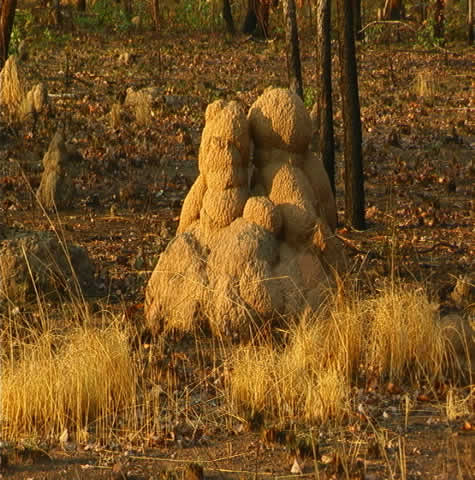 In fact, the more we learn about termite mounds and their bite-size inhabitants, the more enraptured we become. More so perhaps than Verna Kruckow, our unimpeachable hostess back at Pinnacle Springs Station, who has to share her house with them. We haven’t yet tired of their presence, however, as they keep mostly to themselves, and we’re too busy dealing with blow flies. Here are some terrific facts you mightn’t know about the tincy little things which cover most of the Northern Territory:
*It is unusual for termites to be active in the daytime. This is because their soft bodies cannot prevent water loss enough to survive in the sun’s heat.
*Sometimes, geckos lay their eggs inside termite mounds.
*Golden-shouldered Parrots, Hooded Parrots and the extinct Paradise Parrot build their nests in the mounds, and feed on the seeds of native grasses.
*The fact that there are millions of termites has allowed lizards to become very abundant. More lizards eat termites than anything else.
*Soldier termites have armoured heads and large jaws ready to attack anything which threatens the colony.
*Tens of thousands, and sometimes millions of termites inhabit each nest. There are so many that of you weighed all of the termites in one area they would weigh more than all the kangaroos in the same area.
*All the members of a colony continually exchange food and saliva with one another. These substances have chemicals in them which communicate messages to the whole colony. Each termite colony has a distinctive odour.
*Somewhere in the termite nets is a queen ant, gigantic in comparison with the other termite workers who feed and tend to her needs.
*All of the three genera of ants are found in Australia.
*The Tanami Desert has eight hundred termite mounds per hectare.
*Termites collect water from the soil, tunnelling to depths of up to one hundred metres, to raise the humidity within the mounds. The galleries of most termite mounds have relative humidities of close to ninety-five per cent.
*The pregnant abdomen of the queen is swollen to many times the size of one of her attendants. She is the only mother amongst the thousands of termites and her sole job is to lay eggs, which she does continually.
*Termites eat cellulose – the hard part of plants, such as the trunks of trees and the hard spiky leaves of spinifex. Because hardly any other animal can eat this, termites have an abundant supply of food. They also eat animal dung.
*Ants are one of the most diverse genus of multi-celled organisms in the world, along with Acacia Trees, and Dung Beetles.
*There are often openings in the ground at the base of a spinifex clump. These are entrances to the termite nest, highways leading into an underground metropolis of ants, and are the reason termites are rarely seen around the mounds.
*Ants survive in Arid Australia at ground temperatures of over sixty-five degrees centigrade.
Suggested learning activities:
Try to find answers to as many of the following questions as you are able. Be creative – visit the school library, ask your teachers and parents, check the internet – you might even find some of the answers in this update . . .
How do termites differ from ants?
Who are the termites main predator?
How big can an ant grow?
How far does termite mound covered land extend in the Northern Territory and Queensland?
Where else in the world are termite mounds found?
What type of animal is a termite?
How many eggs can a queen ant lay and how long do they take to hatch?
What similarities does a termite colony have to a bee hive?
What adaptations have termites developed to cope with desiccation?
. . . and anything else you can think of.
]]>
In fact, the more we learn about termite mounds and their bite-size inhabitants, the more enraptured we become. More so perhaps than Verna Kruckow, our unimpeachable hostess back at Pinnacle Springs Station, who has to share her house with them. We haven’t yet tired of their presence, however, as they keep mostly to themselves, and we’re too busy dealing with blow flies. Here are some terrific facts you mightn’t know about the tincy little things which cover most of the Northern Territory:
*It is unusual for termites to be active in the daytime. This is because their soft bodies cannot prevent water loss enough to survive in the sun’s heat.
*Sometimes, geckos lay their eggs inside termite mounds.
*Golden-shouldered Parrots, Hooded Parrots and the extinct Paradise Parrot build their nests in the mounds, and feed on the seeds of native grasses.
*The fact that there are millions of termites has allowed lizards to become very abundant. More lizards eat termites than anything else.
*Soldier termites have armoured heads and large jaws ready to attack anything which threatens the colony.
*Tens of thousands, and sometimes millions of termites inhabit each nest. There are so many that of you weighed all of the termites in one area they would weigh more than all the kangaroos in the same area.
*All the members of a colony continually exchange food and saliva with one another. These substances have chemicals in them which communicate messages to the whole colony. Each termite colony has a distinctive odour.
*Somewhere in the termite nets is a queen ant, gigantic in comparison with the other termite workers who feed and tend to her needs.
*All of the three genera of ants are found in Australia.
*The Tanami Desert has eight hundred termite mounds per hectare.
*Termites collect water from the soil, tunnelling to depths of up to one hundred metres, to raise the humidity within the mounds. The galleries of most termite mounds have relative humidities of close to ninety-five per cent.
*The pregnant abdomen of the queen is swollen to many times the size of one of her attendants. She is the only mother amongst the thousands of termites and her sole job is to lay eggs, which she does continually.
*Termites eat cellulose – the hard part of plants, such as the trunks of trees and the hard spiky leaves of spinifex. Because hardly any other animal can eat this, termites have an abundant supply of food. They also eat animal dung.
*Ants are one of the most diverse genus of multi-celled organisms in the world, along with Acacia Trees, and Dung Beetles.
*There are often openings in the ground at the base of a spinifex clump. These are entrances to the termite nest, highways leading into an underground metropolis of ants, and are the reason termites are rarely seen around the mounds.
*Ants survive in Arid Australia at ground temperatures of over sixty-five degrees centigrade.
Suggested learning activities:
Try to find answers to as many of the following questions as you are able. Be creative – visit the school library, ask your teachers and parents, check the internet – you might even find some of the answers in this update . . .
How do termites differ from ants?
Who are the termites main predator?
How big can an ant grow?
How far does termite mound covered land extend in the Northern Territory and Queensland?
Where else in the world are termite mounds found?
What type of animal is a termite?
How many eggs can a queen ant lay and how long do they take to hatch?
What similarities does a termite colony have to a bee hive?
What adaptations have termites developed to cope with desiccation?
. . . and anything else you can think of.
]]>
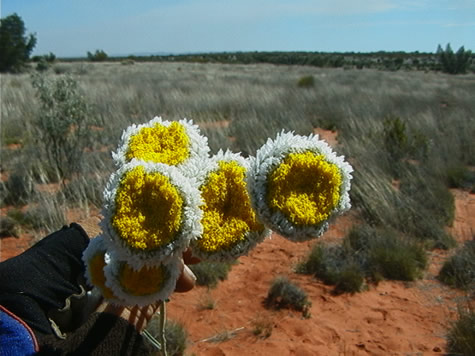 Can you find a borderline in your local environment where the types of plants which can grow, change? Think about why they change – perhaps it’s the altitude, a different soil base, nearness to water, or more protection from the elements. Is it a natural border, or does it reflect the different ways in which humans use the land?
bel
]]>
Can you find a borderline in your local environment where the types of plants which can grow, change? Think about why they change – perhaps it’s the altitude, a different soil base, nearness to water, or more protection from the elements. Is it a natural border, or does it reflect the different ways in which humans use the land?
bel
]]>
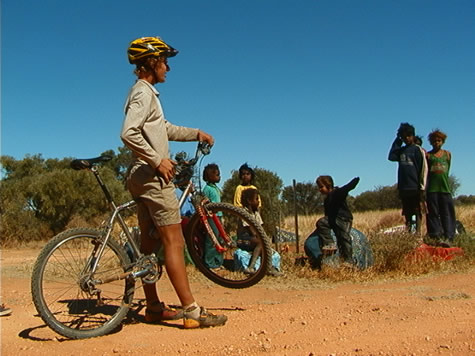 Telling us about their life at home, we were astonished to hear that their families still use traditional hunting and gathering techniques to provide a large proportion of their household’s food needs. One six year old girl had the knowledge and skills to survive in the bush without stores for food, or help from anyone else.
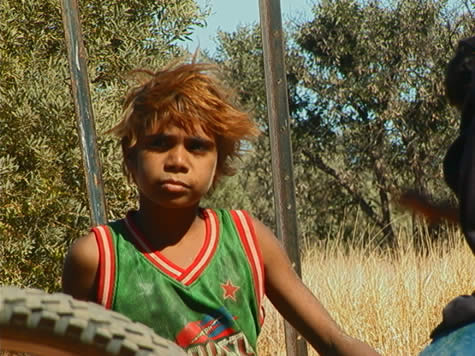 Goannas, a species of lizard which includes the second largest in the world, make a favourite meal of the local people. Also known as monitor lizards, they are thought to have evolved from the Pleistocene “mega-goanna”, which reached a length of five metres, and weighed around one thousand kilograms.
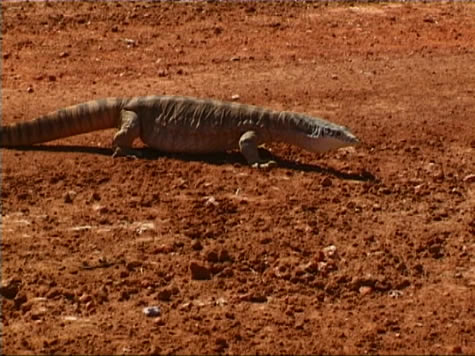 The goannas of today grow up to two metres at most, and fat ones the size of a nine or ten-year-old child are not uncommon. Junior, a student from Urandangi told us how together his family had eaten a goanna as big as himself in just one day. Their people also catch yellow-bellies (fish), eat bush fruits, and hunt kangaroos for meat.
Suggested learning activities: Find out where the foods you eat come from. Why do people where you live eat the foods they do? How much of your family’s food is grown / raised / manufactured near where you live? How much comes from other places around the continent? How much is imported from other countries? Can you think of some other people around the world, who would eat certain foods because they occur naturally in the environment in which they live?
bel
]]>
The goannas of today grow up to two metres at most, and fat ones the size of a nine or ten-year-old child are not uncommon. Junior, a student from Urandangi told us how together his family had eaten a goanna as big as himself in just one day. Their people also catch yellow-bellies (fish), eat bush fruits, and hunt kangaroos for meat.
Suggested learning activities: Find out where the foods you eat come from. Why do people where you live eat the foods they do? How much of your family’s food is grown / raised / manufactured near where you live? How much comes from other places around the continent? How much is imported from other countries? Can you think of some other people around the world, who would eat certain foods because they occur naturally in the environment in which they live?
bel
]]>