Australia Lesson Activities - ESDtag:www.expedition360.com,2007:/australia_lessons_esd//232007-04-27T09:19:02ZEducational for Sustainable Development (ESD) lessons sent from the Outback by the Overland Australia team of Expedition 360 for use by classrooms worldwide free of charge.Movable Type 3.35Bird Populations and Sustainabilitytag:www.expedition360.com,2001:/australia_lessons_esd//23.9222001-10-17T09:16:47Z2007-04-27T09:19:02ZTHEME: Birds SUBJECT AREA: Sustainability TOPIC: Gouldian Finch 2001 October 17, Wednesday “It was with feelings of the purest affection that I ventured to dedicate this lovely bird to the memory of my late wife.” John Gould, 1865. Historical records...jasonwww.expedition360.com
Reason for population decline may be attributed to trapping (they were trapped and exported by the thousands), changes to their habitat caused by inappropriate burning practices, and disease (infection caused by a lung mite).
During the Dry season and early Wet, the Gouldian Finch lives in grassy woodlands. They prefer rocky and hilly country.
Gouldians eat grass seeds and prefer native sorghum. During the Wet, sorghum becomes scarce and the finches resort to more common grass seeds. They drink from small water holes that are surrounded by vegetation as it offers protection from pythons and goannas.
Gouldian Finches are the only Australian finches to nest exclusively in tree hollows. The Snappy gum and Salmon gum are the two types of Eucalypts they prefer for their nests. They build a grass cup nest and lay 4-8 eggs. Predators that prey on the nest (and sometimes the parents!) are goannas or Brown tree snakes.
To manage the Gouldian Finch population for conservation purposes, it is important to know how many are living and if the population is declining, stable, or increasing. Their breeding and nesting habitats are also under observation.
To answer these questions, the Conservation Commission carries out a banding program to track the patterns and growth of the finches. This study involves netting these finches around water holes and placing a numbered aluminium band around the right leg of each bird. Banding sites are monitored each year and recaptured birds are identified and recorded.
Suggested learning activities: What types of birds in your area are endangered and under protection? How are their numbers monitored to control populations and promote growth, if possible? Are their habitats threatened and, if so, in what way? What can be done to protect the natural environment of these birds?
April
]]>
Cattle Ranching - sustainable farming practisestag:www.expedition360.com,2001:/australia_lessons_esd//23.9052001-10-10T07:37:29Z2007-04-27T07:41:51ZTHEME: Cattle Ranching SUBJECT AREA: Education for Sustainable Development (ESD) TOPIC: sustainable farming practises During our stay at Moolooloo Station we got to interview the Station Manager Mark Clifford. One of the questions we asked him was how important it...jasonwww.expedition360.com
The reason cattle ranching in the Victoria River basin has been so successful since Nat Buchanan first stocked nearby station Victoria River Downs in 1884 (see History update for the day) is largely because of the protein rich grasses that thrive on the black clay soil and the amount of rainfall the area receives each year (around 28-30 inches per annum). But, during drought years, when the reduction of vegetation in turn means the soil is more open to erosion from the wind, the land is in serious danger of becoming degraded. Should a particularly dry winter (April through October) be followed directly by a particularly wet summer (November through March), the topsoil will be further eroded by floodwater. Add cattle to the equation, especially more than the optimum cow/calf unit per square kilometre, and you could be in trouble. Mark continues:
“It’s not impossible to have a drought year, in which instance we have to look quite closely at our cow/calf unit per square kilometre – normally around 6 to 1 on Moolooloo. In drought years we’d have to look at reducing this figure to maybe 3 or 4, or even less, and taking the surplus animals off the land.”
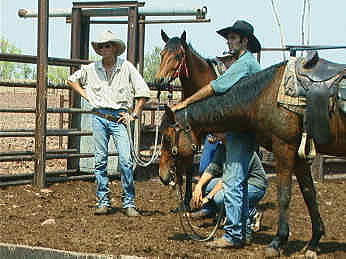
Suggested learning activities: it seems that monitoring the pastures, either by satellite imagery from space or by a scientist on the ground, is the method that Mark uses to safeguard his pastures from degradation. Data from monitoring procedures can be used in conjunction with computers to build ‘models’ from which he can make well-timed range management decisions, such as an early reduction of the cow/calf unit per kilometre ration - before it gets too late and erosion sets in.
Suggested learning activities: Find out about another farming practice – perhaps in the area near where you live – in which monitoring the effect of the farming upon the land forms an essential part of land management and how the environment is safeguarded from undue degradation. If the farming practise involves animals, compare the carrying capacity of the land (animal to square kilometre ratio) to that of Moolooloo station. If the figures are very different, suggest reasons as to why this is the case?
]]>
Culture Collision - Aborigines vs European Settlerstag:www.expedition360.com,2001:/australia_lessons_esd//23.9022001-10-09T07:19:24Z2007-04-27T07:22:25ZTHEME: Timber Creek SUBJECT AREA: Education for Sustainable Development (ESD) TOPIC: European expansion for cattle ranching “Natives are numerous on Victoria and Ord and are very treacherous, a fine race and very independent”. Lindsay Crawford 1885. The story of European...jasonwww.expedition360.com
By the turn of the century most of the prime cattle lands were under European control. Some Aborigines had given up the struggle and had come into camps near the homesteads, but others stayed out in the rough range country, killing cattle – and white men – whenever possible.
In 1910 a new wave of hostilities broke out when the last remaining refuge areas of the ‘wild blacks’ was taken up for pastoral use. Brigalow Bill was speared and killed on the Humbert River, and Harry Condon was wounded on Bullita station. Another manager was speared and killed on Bullita in 1919, followed by the alleged murder of an Aborigine in 1922 in which the victim was chopped up and burnt. The station cook was charged, and a warrant also issued for the arrest of the manager. The cook was acquitted and the manager never seen again.
Small groups of Aborigines held out in the ranges in the 1920’s and there were occasional clashes with the newcomers. The last round of serious Aboriginal resistance began with the murder to two European prospectors on the Fitzmaurice River in 1930. The hunt lasted 2 years and finally ended with the leader, Nemarluk, on Legune Station.
This tide of displacement and associated hostilities was part-way reversed in 1976 when the Aboriginal Land Rights (NT) Act was passed allowing traditional owners to claim some of their original land back. But, as we discussed in the geography update of September 27, the only land that was really left to be claimed was Crown land – mainly desert areas with little or no water, or any other value to anyone (such as the potential for mining). Some ‘useful’ land was however given back, such as the area around Dagaragu (see history update for Oct 1st). But for the most part the choice areas, in the form of pastoral leases, were retained for existing European cattle ranchers.
And so today the bad feeling still seems to be there, bubbling beneath the surface. From our limited perspective - biking through the region with just a few day’s to get up to speed on the situation - it seems the hostilities were too recent to yet be forgotten. But the way forward according to all the people we’ve spoken to from both Aboriginal and European backgrounds is for both cultures to work together to overcome the past and build a positive future for Australia. With the passing of a few more generations, and a great deal of effort and perseverance on both sides, this ideal should hopefully one day become a reality.
Suggested learning activities: can you think of at least one other area of the world in which European colonists took over lands already inhabited by indigenous peoples? Compare the differences and similarities between this area and the situation in Australia, as detailed above. How is this area today? Has there been any reconciliation? Can the situation be described as ‘better’ or ‘worse’ than it was when the Europeans first arrived.
]]>
Protecting Species Biodiversitytag:www.expedition360.com,2001:/australia_lessons_esd//23.8902001-10-02T06:20:38Z2007-04-27T06:24:21ZTHEME: Gregory National Park SUBJECT AREA: Education for Sustainable Development (ESD) TOPIC: Protecting species biodiversity – methods used in National Parks The Department of Environment and Wildlife Services co-ordinate the preservation and protection of native flora and fauna in Australian...jasonwww.expedition360.com
Areas can be claimed to be a National Park for the protection of a certain landmark or place of beauty/historical value, or the home of a plant or animal that is endemic to the area - or is endangered and needs special protection. Some parks are declared so that people do not modify the environment for farming purposes.
There are rules and regulations that everyone must follow whilst a visitor in a national park, which include the following:
- Leave areas as you find them. No littering.
- It is illegal to remove anything. No removing or damaging flora or fauna in the park.
- Pets and domestic animals do not belong in national parks – leave them at home.
- Firearms are forbidden in the parks (even the Wildlife Services can’t shoot feral (wild) animals that they are attempting to relocate).
- No hunting of feral animals in the parks.
- No soaps or toiletries to be used in water systems.
- You must stay on set tracks, and walking trails. Don’t leave the path.
- Do not enter areas that you have no permits or permission for.
- Light fires only in designated areas.
- Do not feed animals in the park.
These are the basic rules that should be followed when going into any National Park in Australia. When visiting the park make sure you get any permits you need from the Park Ranger, and whilst doing this ask about any special rules and regulations relevant to the park you are visiting.
Suggested learning activities:
- Write down a reason why each of the rules and regulations in the list above are enforced in National Parks. For example: Pets are not allowed because they might escape and become feral, and because they may hunt native animals and damage the park. How would you enforce these rules?
- Find out about National Parks in your country and compare the rules and regulations with those outlined above for Australian National Parks.
Joshua.
]]>
Pollutiontag:www.expedition360.com,2001:/australia_lessons_esd//23.8852001-09-30T12:03:50Z2007-04-26T12:09:11ZTHEME: Road to Lajamanu SUBJECT: Education for Sustainable Development (ESD) TOPIC: pollution In the photo you see us sitting writing today’s updates. Around us you might also be see quite a large quantity of refuse that has been left here...jasonwww.expedition360.com
In the photo you see us sitting writing today’s updates. Around us you might also be see quite a large quantity of refuse that has been left here by other people who used this camping area previously.
During our editorial meeting, in which we sit around in a circle and decide who is going to write updates and on what topic, we entered into a debate as to whether the rubbish around us could actually be described as ‘pollution’ of the environment.
Practically everyone in the group first said ‘Yes, of course it’s pollution. Look at the mess!” But then someone spoke up and countered “But how is just ‘looking messy’ polluting the environment?” It was then clear that we had to define what pollution actually was before passing a judgement on our campsite. Such a judgement might be important, for example, if we felt it important to clear up the refuse ourselves, regardless of whether someone made the mess in the first place.
The definition of pollution is something that upsets the balance of nature. Or put more specifically, something that causes a negative effect on the environment, be it the soil, the ocean, the air or an animal or plant. Something might only become a ‘pollutant’ once it reaches a certain level of concentration in the environment. For example, the smoke from a small Bushfire may be easily assimilated (absorbed or diluted) into the atmosphere. However, when the amount of smoke and heat being released reaches a certain point beyond which it can be said to do ‘harm’ to the environment – like the smoke cutting out the sunlight in an area thereby affecting the ability of trees and plants to photosynthesise efficiently, or the combined heat of the fire contributing to global warming, which in turn affects the global ecosystem adversely – we can say it is a pollutant.
So, what about all the refuse around us? Well, the more we got to thinking and discussing it, the more we realised that we had to look at each piece of refuse individually to decide if it was a pollutant or not, rather than make a blanket judgement for all.
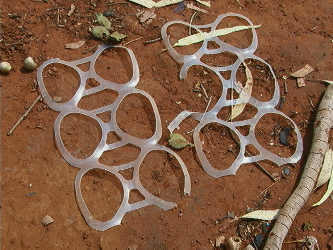
• Plastic ring pieces: we decided the plastic ring pieces that hold a 6-pack of drink cans together were the worst pollutants as they could get caught around the necks of goannas and birds, eventually suffocating them.
• Plastic bottles: next on the list would be plastic bottles that animals with long necks – like lizards - have been known to get their heads stuck in while attempting to drink the remaining fluid.
• Glass bottles: they’ve been known to start bush fires by the sunlight heating the inside of the bottle hot enough to light any dried grass that might be inside, in much the same way as a magnifying glass will. Also, if broken, shards of glass can cut and maim the feet of many different animals, including cows, wild horses and camels, and of course bare-footed bikers!
• Aluminium cans were not considered a pollutant, as we couldn’t think of an adverse affect on either plants or animals, and they take around 100 years to biodegrade into the soil – quite a short time on the greater time scale of things.
• Cardboard boxes: we decided cardboard boxes were also not a pollutant, as they will easily break down into the soil, especially when the rains come.
So, we have decided to clean up and dispose of appropriately the plastic ring pieces, plastic bottles and glass bottles, but leave the aluminium cans and cardboard boxes, even though (to us) they look unsightly.
One thing made clear from this exercise is that our judgement of what was a pollutant and what wasn’t was not always obvious, and was ultimately decided by our limited knowledge of the effects of the piece of refuse on the environment. Education and further research would therefore be needed in order to make better decisions in future.
Suggested learning activities:
1. Hold a debate in class about pollution in much the same way as we did at our editorial meeting. Make sure everyone in the class understands what pollution really means, thereby giving them the critical thinking tools for deciding for themselves what is a pollutant and what is not.
2. As the second half of the debate you might choose three articles of refuse regularly thrown away from our homes in the rubbish/garbage. Discuss the effects of those articles on the environment in which it is disposed (a landfill more often than not, if not recycled or re-used). Remember to include varying levels of each article of refuse in the discussion as a way of determining to what extent it is a pollutant.
]]>
Snakes, Public Relations and Ecosystem Stabilitytag:www.expedition360.com,2001:/australia_lessons_esd//23.8792001-09-26T09:39:01Z2007-04-26T09:42:33ZSnakes and ESD (Education for Sustainable Development) Even since the story of Adam and Eve in the book of Genesis, snakes have taken a bad rap. A recent example when we were in Yuendumu was the kids finding a baby...jasonwww.expedition360.com
In the tussock grasslands of northern Australia, snakes feast on the abundant mammal fauna which these fertile grasslands support. Cracks in the ground, into which snakes –such as the Speckled Brown Snake - happily slither, provide ready-made refuges for the Plague Rat, Planigales, other carnivorous marsupials, and also bats. Succulent green vegetation, insets and seeds in turn form the diet of Plague Rats and as these are in abundance, so are the rats. Because snakes eat rats, they are common too.
Snakes also eat lizards. The Death Adder, for example, will use its tail to lure an unsuspecting lizard to within striking distance. But if the lizard happens to be a goanna, the snake had better watch out! Goannas (like Spencer’s monitor) eat snakes (like the Death Adder), stalking up to them until they coil and strike. The goanna cleverly avoids the first strike, then grabs the snake while it is momentarily off balance before it recoils to strike again. Other species of animals for which snakes constitute either major or minor portion of their food source include birds such as hawks and Kookaburras.
Now consider what would happen if snakes were removed from the food chain in the tussock grasslands of north Australia….
The species predated upon by the snakes – such as the herbivorous mammals and marsupials - would increase exponentially to the point of being unsustainable: overgrazing the limited vegetation the grassland have to offer. In a drought year the results would be even more marked.
The species that predate upon snakes – such as goannas and birds of prey – that are, to a degree, reliant on snakes as a source of food, would in turn have to either find alternatives or starve. Even in a non-drought year we could expect these species to be severely affected.
So, no matter how unpleasant or scary we might find snakes, they are an essential part of the rich tapestry of life that has evolved (for whatever reason) on Planet Earth of millions of years. It is surely part of our responsibility as guardians of biodiversity for future generations to enjoy, to ensure snakes are treated with equal respect and right to life as any other species.
Suggested learning activities: think of an animal or plant local to you that is considered a threat or undesirable to humans. Then host a debate in class: one side forwards a motion to eradicate the species, the other side acts in defence of the species. Be sure to remember that the debate is theoretical only – i.e. just because you are on the side arguing to eradicate the species doesn’t necessarily mean you actually mean this in real life.
]]>
Introduced Species - The Rabbittag:www.expedition360.com,2001:/australia_lessons_esd//23.8712001-09-24T08:30:38Z2007-04-26T08:33:35Z2001 September 24. Rabbit Flat Roadhouse. Soon after rabbits and foxes were introduced to Australia in the mid 1800s, it became apparent that a terrible mistake had been made. By the time the spread of rabbits became uncontrollable, European settlement...jasonwww.expedition360.com
Soon after rabbits and foxes were introduced to Australia in the mid 1800s, it became apparent that a terrible mistake had been made. By the time the spread of rabbits became uncontrollable, European settlement had not yet had the time to have a great direct impact on the remoter parts of the country. Rabbits, however, rapidly spread into areas which cattle stations had not yet pioneered, and had a devastating impact on the landscape, and on native animals and vegetation.
In just a few years, a major contributor to desertification had established itself, seemingly irreversibly. A dismally small proportion of the original biodiversity remains. Rodents are self-destructive in that they will breed in times of plenty, and eat everything until not only other species suffer, but the land they destroy can no longer support them, and they die from starvation.
Rabbits also compete with farm animals, especially sheep, for grazing land. Large numbers of rabbits in an area will cause an increase in the number of foxes, cats, and dingoes – all of which prey upon them. When the rabbits are all eaten, or have exhausted their food supply and starved, dingoes will hunt sheep, foxes will hunt poultry, and cats will hunt native birds and marsupials.
All across the country, farmers work alongside local Landcare/Catchment Management Authorities running rodent eradication programs. These are subsidised by the government, and include:
* 1080 Poisoning: Livestock are mustered and removed from area, and poisoned carrot is laid as bait.
* Warren ripping: Bulldozers are used to demolish burrows, and rabbits are shot as they escape the destruction.
* Hunting: Shooters are encouraged to hunt pest animals on private property with the permission of the landowners. This method has been successful in the past with water buffalo in the Top End.
* Re-vegetation: Tree planting to counteract erosion is carried out within rabbit-proof fencing.
* Biological means: ‘Mixa’ and the more recent Calicivirus are diseases which are specific to European grey rabbits, and have been developed and released to try to reduce the numbers of feral animals, and to control the spread.
Suggested learning activities: find out what programs are used in agricultural areas in your country for the control / management of any of the following:
* Feral animals
* Salinity
* Erosion
* Overuse of land.
* Reintroduction of native species.
Why do you think it’s important for neighbouring landowners to work together on these projects?
bel
]]>
Ecosystems & Fire Managementtag:www.expedition360.com,2001:/australia_lessons_esd//23.8602001-09-17T14:48:22Z2007-04-25T14:53:26Z2001 September 17, Monday. North of Ace Bore. Today we saw first hand the extent to which fire has become a natural part of this landscape, and how little impact small and regular fires can have on the dominant ecosystem...jasonwww.expedition360.com
Small regular fires benefit the ecosystem simply because they prevent raging wildfires, which no small creature can endure, as they have to travel too far to find food and shelter from predators. Dingoes, and feral predatory animals, such as cats and foxes, are deterred by the spiky form of spinifex. This makes the grasslands an excellent home for lizards, and an important tool for the protection of endangered species such as the great desert skink.
Over forty thousand years ago, aborigines came to Australia and began burning the country to find food and to make crossing the land easier. Many species would have found this difficult to live with, and for some it would have meant extinction. Since that time, both plants and animals have adapted to regular burning, and a new balance was formed. It was not until last century that a drastic change occurred again in the way the land was being managed, and lack of burning caused problems with uncontrollably large fires, and introduced species like buffel grass, which spread hot fires rapidly.
Many aboriginal people moved into settlements in the early 1900's, and today, without the guidance of people who have inhabited the country for generations, there is little method to the fires that occur in out of the way desert landscapes, such as the ones we have seen today.
The World Wildlife Fund and the Threatened Species Network now work with central Australian indigenous communities to try to reinstate patch burning – the regular burning of small areas of bush to protect biodiversity. They are taught the importance of their traditional landcare, and of protecting the once-common animals which are disappearing from neglected and abused bush areas.
Have you ever seen ‘burning off’ on roadsides or in agricultural land? If you have, you might also have noticed the lush green of the first new growth after the burning. Think about the benefits of supporting young growth in such a harsh environment, and some of the animals which would gather to feed on the new growth which follows fire.
bel
]]>
Aborigines and Land Management Programstag:www.expedition360.com,2001:/australia_lessons_esd//23.8492001-09-12T13:59:29Z2007-04-25T14:03:35Z2001 September 12, Wednesday. Larapinta Drive, between Alice Springs and Hermannsburg. Once again exchanging cockcrow for the rich metallic trilling of a songlark, we escaped the noisy town; taking with us the knowledge which during our stay we’d gathered from...jasonwww.expedition360.com
At Arid Lands, we spoke with Colleen, who told us about some of the land management programs which are being co-ordinated through the centre. She has an interesting job because she has to deal with station owners, aborigines and town dwellers, who all have different ideas on how the land should be managed.
Regular burning off, the protection of native animals, the control of introduced species, and the re-vegetation of abused land, all need to be managed to protect bio-diversity in the dry and fragile ecosystem.
YALIA stands for Young Aboriginal Landcare In Action, and is a community project designed to help young aborigines learn land management skills by encouraging the passing on of traditional knowledge, and augmenting this with modern western farming methods.
The Tangentyere Land Care Council began YALIA in 1997, with funding from the National Heritage Trust. Tangentyere was originally a community health care facility for aborigines in town settlements. It has since expanded to work with rural communities.
YALIA programs are interactive and hands-on because English is a second language for most of the participants. Their students come from all age groups (so that older members can help the younger ones) and they take trips in the country and learn things like:
* Seed collection and propagation
* Habitat Studys
* Animal Watch
* Tree planting
* The uses of plants as food and bush medicine.
Find an organisation working toward sustainability in your home area. What is their eventual goal? What are they trying to achieve? What problems do they face?
bel
]]>
Introduced Species & Sustainabilitytag:www.expedition360.com,2001:/australia_lessons_esd//23.8382001-09-02T13:04:15Z2007-04-25T13:06:55ZESD - Camels Today a bunch of us went for a camel ride and interviewed Henry the camel handler. He told us a number of interesting things about the 200,000 'feral' camels* that are now in Australia, including what positive...jasonwww.expedition360.com
"Camels in general are quite gently on the environment because they
don't have a hoof like a cow or a horse that cuts up the ground. You
can go 'out bush' and see tracks that have been washed down to 2m or even
more in places. Feral horses or donkeys have been walking up and down
the track and all that soil gets washed away with the next rains. After
while you have a canyon there! Camels are good because they have flat
feet and don't cause much erosion.
Also, if you have a mob of cattle around a bore (water hole) in a dry
year they might do 15km from the nearest water before having to turn
around to get a drink. Of course after a while the whole country is
washed out and turned into a bull-dust hole. Camels come in once a
week, have a big drink (100-200 litres), then wander right out in to the
middle of the desert.
Camels will also go along picking at trees - pruning them more than
destroying them. They don't keep eating at one tree for very long.
They'll just pick off the best bits and then continue along and go to
the next tree. Of course if you have large numbers of camels in an area
they can become a problem because they have favourite plants they keep
feeding on over and over again and therefore eventually destroy the
tree.
Some aborigines actually took to camels quite well, using them to shift
their camps. You see old photos with aboriginal women loaded up with
all their gear on a camel's back. On the other hand where camels turned to
native rock-holes and had a drink they may have depleted the tribe's
water supply for the next 6-months until the next rains come. If the
water didn't get replaced in a native well or a soak the tribe would
have had to move on."
Suggested learning activities: start a discussion on whether the feral
camel population in Australia could be said to be sustainable.
Identify a feral species in your country/local area and draw
comparisons with the effect it has on the environment and/or people to the feral
camel population in Australia.
*Feral means non-indigenous, or not originating from the country the
species is resident in.
Jason
]]>
New Species, Disease & Quarantiningtag:www.expedition360.com,2001:/australia_lessons_esd//23.8262001-08-28T11:32:35Z2007-04-25T11:35:24ZWhen those members of the team from overseas arrived into Cairns International Airport the week before the trip started, representatives from the Australian quarantine service checked their bike tires for traces of mud and asked some members whether they'd visited...jasonwww.expedition360.com
We passed this sign today (see photo). It is designed to being people's
attention to the presence of Tuberculosis and Brucellosis in the area.
Although less infectious than Foot and Mouth, these diseases, if not
controlled by quarantining of infected cattle, could spell disaster in
the local and national cattle farming industry.
Suggested learning activities: find out about any diseases that farmers
in your local area have to take preventative measures against. What
impact would there be on the farmer, the local and national economy
should the disease/s get out of control.
jason
]]>
Bushfire Managementtag:www.expedition360.com,2001:/australia_lessons_esd//23.8192001-08-27T10:57:53Z2007-04-25T11:01:56ZBush fires are an essential part of nature, as the process facilitates plant reproduction and growth. But the occurrence of bush fires has a lasting effect on several aspects of the desert ecosystem. Before European settlement, Aboriginal people burned the...jasonwww.expedition360.com
At least 40,000 years ago, fire was a major environmental tool in the evolution of Australian plants. Lightning started wildfires as the plant growth built up after each Wet season. When the Aboriginal people arrived, they began to use fire stick farming to attract a variety of game animals. They did this by burning small patches of vegetation in different stages of regeneration; the first affected were the new green shoots of spinifex, then the longer lived grasses, and finally a community of grasses dominated by spinifex. In 1872, Ernest Giles, the first European into the Gibson Desert recorded “the natives were about, burning, burning, ever burning; one would think they were of the fabled salamander race, and lived on fire instead of water.”
Animals take advantage of the tasty and nutritious plants that germinate after the burning. Fire Beetles cover the blackened earth while Crimson Chats dive after them. Fork tailed kites and hawks circle after the fire has passed, feeding on fleeing animals.
Many other animals which used to thrive in Spinifex grasslands managed by fire have vanished. When Europeans settled in inland Australia, the patch-burning technique of the Aborigines was altered. They were forced into missions and towns, their patch burnings abandoned. The considerable change in these burning techniques contributed to the demise of native animal species.
The Rufous Hare Wallaby became critically endangered. It was once widespread and abundant. Its habitat is now limited to small islands off western Australia and a small region of the Tanami desert. The collapse of this population 50 years ago coincided with the movement of Aborigines into settlements. Today, as Aborigines move back onto their native homelands, their ancient burning techniques once again in practice encourage a mosaic of animal habitats and vegetation patterns.
Suggested activities: How is fire utilised where you live? What are its uses in agriculture and grassland management? How does burning impact our environment, considering air pollution and destruction of property caused by wildfires?
April
]]>
Managing Water and the Artesian Basintag:www.expedition360.com,2001:/australia_lessons_esd//23.8042001-08-22T09:35:51Z2007-04-25T09:46:47Z2001 August 22, Wednesday. North Urandangi Road. Without the Great Artesian Basin, much of inland Australia would be uninhabitable. It has largely been taken for granted and exploited since early European exploration penetrated the harsh interior of the continent. For...jasonwww.expedition360.com
There are about 4700 bores throughout the basin, 850 of which are
uncontrolled. 5 700 mega litres flow from bores each year, creating not
so much a problem with water drying out entirely, as with reduced
underground pressure. However in places, severe overuse has caused some
bores and mound springs to stop flowing altogether.
Initiatory effort is being made already to protect water supply for
future generations. Where in the early days of desert settlement, water
flow could be altered by a few turns of the bore head with a shifting
spanner; now supplies are regulated by a series of gauges and rows of
pumps, and are monitored by modern modems and computers.
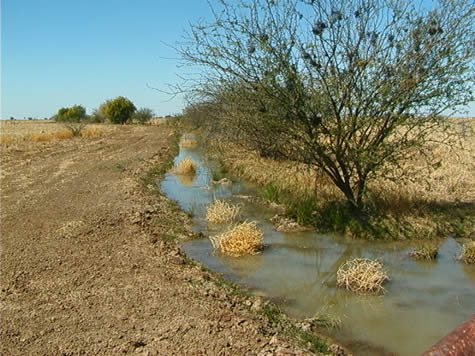
Drainage channels, built across open land like moats, are being phased
out in favour of closed pipelines, as the resources to do so become
available. It is estimated that around ninety-five per cent of open
channel water is lost through a combination of evaporation, seepage,
and breakouts. On the other hand, local wildlife, which have come to depend
upon the sub ecosystem created by the channel supply, must relocate to
original sources, putting sudden and unsustainable pressure on those
reserves. "Cap and Pipe " programs have been instigated throughout the basin area
with differing levels of success. They aim to cap uncontrolled bores
and replace some of the 34 000 kilometres of exposed bore drains with piped
systems. The exposed channels of the old system can present dangers in
the form of disease spread through manure and decomposing carcasses,
and the spreading of weeds through seed transference. The tanks and troughs replacing the basins need to be checked regularly; water loss through blockages and seepage can be disastrous.
Consequently, each bore sunk in an isolated area becomes a huge community responsibility, and neighbours living many miles apart must work together to safeguard the water supply they rely upon so completely. An inordinate amount of organisation and work is required to bring the projects to success. Studies, site inspections, history and groundwater reports, geophysical logging, geological assessments, estimates of required work and resources, funding, and gaining support at public meetings are all required for each and every alteration to the
irrigation networks. Unforgiving environments, isolation, and logistics are all obstacles to the success of outback irrigation schemes. The high cost of permits for tapping the supply can be too much for many private landowners, who often run their properties on an overdraft, and are unable to produce that kind of money with the high input needed to keep their property running. The difference a reliable water source makes to cattle condition is profound, and is immediately recognisable both physically and in their behaviour.
With government support and collective effort, two hundred thousand mega litres should be able to be saved each year, as is aimed to be. Working toward the sustainability of this precious resource is so important, as it can mean life or death to the communities reliant upon it.
bel
Think of all the things you use water for each day. Imagine living away
from a clean water source - how long would you last? Think about the
reasons why open channels might have been used originally, instead of
pipelines. Why might settlers have begun such an inefficient method of
transferring the bore water across their land? What resources would
they have had available to them, both materially, and in knowledge of that
kind of engineering? Try to imagine attempting to bring water to an
inhospitable land with these resources. What does this tell you about
the tenacity and fortitude of the first settlers?
]]>
Living Off the Landtag:www.expedition360.com,2001:/australia_lessons_esd//23.7992001-08-21T19:19:49Z2007-04-24T19:23:38Z21 August, 2001 Southwest of Mt. Isa In our tour of the bush yesterday, David Nardoo of the Kalkadoon Aborigine Tribe taught us all about the foods that native people would have found in the harsh climate of western Queensland...jasonwww.expedition360.com
The aborigines did all their living off the land. They competed directly with birds and other animals for the food that was available. Fortunately, being omnivores, they had many different foods available to them besides those offered by plants and insects. They could also hunt emus and kangaroos and snakes. Still, their population would have been limited by the food and water resources available over the course of the year, both of which are in incredibly short supply in the winter season. Those same limits would only allow for a very small number of animals to hunt.
Today, across most of the globe, it seems as if we have very few limits to population growth. Humankind has conquered many diseases. This has allowed the average lifespan to increase. Older people are living longer and healthier lives. Infant mortality has been lowered. Technological innovations in food production have also allowed us to cultivate more food than we actually need and distribute it across the world. Today, you can live in a desert that has no food resources whatsoever and still have easy access to ice cream, pie or breakfast cereal.
Still, there are some that say that there is a limit to our human population growth. These people suggest agricultural land is losing its fertility and that we couldn’t possibly continue to feed the world’s population as it grows past 6 billion. They might suggest, too, that as environmental degradation increases with the human population growth, it will take its toll on human and animal populations, affecting the health and numbers of both. Some thought we would be facing widespread problems with food shortages and disease already. Others say we are facing such problems right now.
Still, there are some who believe that technology will save the day, that we will find new and better ways to produce food over time and that food shortages will never be anything to fear.
Suggested Learning Activity:
Write about your thoughts on this issue. Do you think technology will save the day? Should we be concerned at all? Can the earth handle many more people or are there too many here already?]]>
The Art of Noisetag:www.expedition360.com,2001:/australia_lessons_esd//23.7772001-08-14T17:26:57Z2007-04-24T17:28:42ZEducation for Sustainable Development – ESD. Pollution comes in many shapes and forms. The most obvious that normally spring to mind are things like pollution of the sea by oil spills, pollution of the air by carbon dioxide from vehicle...jasonwww.expedition360.com
We saw an example of this today with the animals we saw (see the general update that Josh wrote). Normally we’re quite a noisy group. Someone (usually Josh or Mike) is laughing or speaking loudly while biking along the road. So even though we’d like to see more wildlife, we really haven’t had too many opportunities so far. But today we stood completely still by the side of the road and let the environment come to us. First we had the emus that came investigating on their ‘emu patrol’. Then the cows come to with in a few feet of Todd while he was filming on a video camera and checked out his Cannondale bike (tasted pretty good by the look of it). Why was this so? Clearly the lack of noise we were making.
The ability to be quiet and listen to one’s environment is valuable in many ways other than getting close to animals. Developing a sustainable future for the planet very much depends on monitoring changes in the environment. On a large scale, measuring potential harmful effects of human actions on the environment is necessary in order to make appropriate policy changes at a national or international level. On a local scale, being aware of how the surrounding environment responds either positively, negatively or indifferently to a person’s actions is useful to know in order to reduce their Ecological Footprint.
Suggested learning activities: list 5 x human actions that affect the environment negatively either on a global or local scale. Suggest how each effect might be monitored and thereby modified, reduced or removed completely.
jason
]]>
 Suggested learning activities: it seems that monitoring the pastures, either by satellite imagery from space or by a scientist on the ground, is the method that Mark uses to safeguard his pastures from degradation. Data from monitoring procedures can be used in conjunction with computers to build ‘models’ from which he can make well-timed range management decisions, such as an early reduction of the cow/calf unit per kilometre ration - before it gets too late and erosion sets in.
Suggested learning activities: Find out about another farming practice – perhaps in the area near where you live – in which monitoring the effect of the farming upon the land forms an essential part of land management and how the environment is safeguarded from undue degradation. If the farming practise involves animals, compare the carrying capacity of the land (animal to square kilometre ratio) to that of Moolooloo station. If the figures are very different, suggest reasons as to why this is the case?
]]>
Suggested learning activities: it seems that monitoring the pastures, either by satellite imagery from space or by a scientist on the ground, is the method that Mark uses to safeguard his pastures from degradation. Data from monitoring procedures can be used in conjunction with computers to build ‘models’ from which he can make well-timed range management decisions, such as an early reduction of the cow/calf unit per kilometre ration - before it gets too late and erosion sets in.
Suggested learning activities: Find out about another farming practice – perhaps in the area near where you live – in which monitoring the effect of the farming upon the land forms an essential part of land management and how the environment is safeguarded from undue degradation. If the farming practise involves animals, compare the carrying capacity of the land (animal to square kilometre ratio) to that of Moolooloo station. If the figures are very different, suggest reasons as to why this is the case?
]]>
 The definition of pollution is something that upsets the balance of nature. Or put more specifically, something that causes a negative effect on the environment, be it the soil, the ocean, the air or an animal or plant. Something might only become a ‘pollutant’ once it reaches a certain level of concentration in the environment. For example, the smoke from a small Bushfire may be easily assimilated (absorbed or diluted) into the atmosphere. However, when the amount of smoke and heat being released reaches a certain point beyond which it can be said to do ‘harm’ to the environment – like the smoke cutting out the sunlight in an area thereby affecting the ability of trees and plants to photosynthesise efficiently, or the combined heat of the fire contributing to global warming, which in turn affects the global ecosystem adversely – we can say it is a pollutant.
So, what about all the refuse around us? Well, the more we got to thinking and discussing it, the more we realised that we had to look at each piece of refuse individually to decide if it was a pollutant or not, rather than make a blanket judgement for all.
• Plastic ring pieces: we decided the plastic ring pieces that hold a 6-pack of drink cans together were the worst pollutants as they could get caught around the necks of goannas and birds, eventually suffocating them.
• Plastic bottles: next on the list would be plastic bottles that animals with long necks – like lizards - have been known to get their heads stuck in while attempting to drink the remaining fluid.
• Glass bottles: they’ve been known to start bush fires by the sunlight heating the inside of the bottle hot enough to light any dried grass that might be inside, in much the same way as a magnifying glass will. Also, if broken, shards of glass can cut and maim the feet of many different animals, including cows, wild horses and camels, and of course bare-footed bikers!
• Aluminium cans were not considered a pollutant, as we couldn’t think of an adverse affect on either plants or animals, and they take around 100 years to biodegrade into the soil – quite a short time on the greater time scale of things.
• Cardboard boxes: we decided cardboard boxes were also not a pollutant, as they will easily break down into the soil, especially when the rains come.
So, we have decided to clean up and dispose of appropriately the plastic ring pieces, plastic bottles and glass bottles, but leave the aluminium cans and cardboard boxes, even though (to us) they look unsightly.
One thing made clear from this exercise is that our judgement of what was a pollutant and what wasn’t was not always obvious, and was ultimately decided by our limited knowledge of the effects of the piece of refuse on the environment. Education and further research would therefore be needed in order to make better decisions in future.
Suggested learning activities:
1. Hold a debate in class about pollution in much the same way as we did at our editorial meeting. Make sure everyone in the class understands what pollution really means, thereby giving them the critical thinking tools for deciding for themselves what is a pollutant and what is not.
2. As the second half of the debate you might choose three articles of refuse regularly thrown away from our homes in the rubbish/garbage. Discuss the effects of those articles on the environment in which it is disposed (a landfill more often than not, if not recycled or re-used). Remember to include varying levels of each article of refuse in the discussion as a way of determining to what extent it is a pollutant.
]]>
The definition of pollution is something that upsets the balance of nature. Or put more specifically, something that causes a negative effect on the environment, be it the soil, the ocean, the air or an animal or plant. Something might only become a ‘pollutant’ once it reaches a certain level of concentration in the environment. For example, the smoke from a small Bushfire may be easily assimilated (absorbed or diluted) into the atmosphere. However, when the amount of smoke and heat being released reaches a certain point beyond which it can be said to do ‘harm’ to the environment – like the smoke cutting out the sunlight in an area thereby affecting the ability of trees and plants to photosynthesise efficiently, or the combined heat of the fire contributing to global warming, which in turn affects the global ecosystem adversely – we can say it is a pollutant.
So, what about all the refuse around us? Well, the more we got to thinking and discussing it, the more we realised that we had to look at each piece of refuse individually to decide if it was a pollutant or not, rather than make a blanket judgement for all.
• Plastic ring pieces: we decided the plastic ring pieces that hold a 6-pack of drink cans together were the worst pollutants as they could get caught around the necks of goannas and birds, eventually suffocating them.
• Plastic bottles: next on the list would be plastic bottles that animals with long necks – like lizards - have been known to get their heads stuck in while attempting to drink the remaining fluid.
• Glass bottles: they’ve been known to start bush fires by the sunlight heating the inside of the bottle hot enough to light any dried grass that might be inside, in much the same way as a magnifying glass will. Also, if broken, shards of glass can cut and maim the feet of many different animals, including cows, wild horses and camels, and of course bare-footed bikers!
• Aluminium cans were not considered a pollutant, as we couldn’t think of an adverse affect on either plants or animals, and they take around 100 years to biodegrade into the soil – quite a short time on the greater time scale of things.
• Cardboard boxes: we decided cardboard boxes were also not a pollutant, as they will easily break down into the soil, especially when the rains come.
So, we have decided to clean up and dispose of appropriately the plastic ring pieces, plastic bottles and glass bottles, but leave the aluminium cans and cardboard boxes, even though (to us) they look unsightly.
One thing made clear from this exercise is that our judgement of what was a pollutant and what wasn’t was not always obvious, and was ultimately decided by our limited knowledge of the effects of the piece of refuse on the environment. Education and further research would therefore be needed in order to make better decisions in future.
Suggested learning activities:
1. Hold a debate in class about pollution in much the same way as we did at our editorial meeting. Make sure everyone in the class understands what pollution really means, thereby giving them the critical thinking tools for deciding for themselves what is a pollutant and what is not.
2. As the second half of the debate you might choose three articles of refuse regularly thrown away from our homes in the rubbish/garbage. Discuss the effects of those articles on the environment in which it is disposed (a landfill more often than not, if not recycled or re-used). Remember to include varying levels of each article of refuse in the discussion as a way of determining to what extent it is a pollutant.
]]>
 ]]>
]]>
 Consequently, each bore sunk in an isolated area becomes a huge community responsibility, and neighbours living many miles apart must work together to safeguard the water supply they rely upon so completely. An inordinate amount of organisation and work is required to bring the projects to success. Studies, site inspections, history and groundwater reports, geophysical logging, geological assessments, estimates of required work and resources, funding, and gaining support at public meetings are all required for each and every alteration to the
irrigation networks. Unforgiving environments, isolation, and logistics are all obstacles to the success of outback irrigation schemes. The high cost of permits for tapping the supply can be too much for many private landowners, who often run their properties on an overdraft, and are unable to produce that kind of money with the high input needed to keep their property running. The difference a reliable water source makes to cattle condition is profound, and is immediately recognisable both physically and in their behaviour.
With government support and collective effort, two hundred thousand mega litres should be able to be saved each year, as is aimed to be. Working toward the sustainability of this precious resource is so important, as it can mean life or death to the communities reliant upon it.
bel
Think of all the things you use water for each day. Imagine living away
from a clean water source - how long would you last? Think about the
reasons why open channels might have been used originally, instead of
pipelines. Why might settlers have begun such an inefficient method of
transferring the bore water across their land? What resources would
they have had available to them, both materially, and in knowledge of that
kind of engineering? Try to imagine attempting to bring water to an
inhospitable land with these resources. What does this tell you about
the tenacity and fortitude of the first settlers?
]]>
Consequently, each bore sunk in an isolated area becomes a huge community responsibility, and neighbours living many miles apart must work together to safeguard the water supply they rely upon so completely. An inordinate amount of organisation and work is required to bring the projects to success. Studies, site inspections, history and groundwater reports, geophysical logging, geological assessments, estimates of required work and resources, funding, and gaining support at public meetings are all required for each and every alteration to the
irrigation networks. Unforgiving environments, isolation, and logistics are all obstacles to the success of outback irrigation schemes. The high cost of permits for tapping the supply can be too much for many private landowners, who often run their properties on an overdraft, and are unable to produce that kind of money with the high input needed to keep their property running. The difference a reliable water source makes to cattle condition is profound, and is immediately recognisable both physically and in their behaviour.
With government support and collective effort, two hundred thousand mega litres should be able to be saved each year, as is aimed to be. Working toward the sustainability of this precious resource is so important, as it can mean life or death to the communities reliant upon it.
bel
Think of all the things you use water for each day. Imagine living away
from a clean water source - how long would you last? Think about the
reasons why open channels might have been used originally, instead of
pipelines. Why might settlers have begun such an inefficient method of
transferring the bore water across their land? What resources would
they have had available to them, both materially, and in knowledge of that
kind of engineering? Try to imagine attempting to bring water to an
inhospitable land with these resources. What does this tell you about
the tenacity and fortitude of the first settlers?
]]>