Australia Lesson Activities - Literacytag:www.expedition360.com,2007:/australia_lessons_literacy//242007-04-27T08:43:37ZLiteracy lessons sent from the Outback by the Overland Australia team of Expedition 360 for use by classrooms worldwide free of charge.Movable Type 3.35Women in the Northern Territorytag:www.expedition360.com,2001:/australia_lessons_literacy//24.9162001-10-16T08:40:46Z2007-04-27T08:43:37ZTHEME: Pine Creek Region SUBJECT AREA: Literacy TOPIC: Women in the Northern Territory ‘No Place for A Woman’ You are familiar with the logistics of our daily travel as we’ve crossed Australia; our camping/living conditions and distances travelled per day....jasonwww.expedition360.com
As they set up camp each evening, it is reminiscent of what we’ve faced each day on the road as we prepare our evening camp.
“When we set out for a new camp, the wagon was loaded with folded tents, swags, tucker (food) boxes, our home-made utensils…hurricane lamps, water bags, and rope (hanging) from the sides. It is little wonder when we set up camp near one little town that a kid driving a billy-goat cart came down to ask when the circus was opening.”
It is interesting to compare distances travelled per day between a 1920s vehicle and a twenty first century push-bike. We have, on the average, completed approximately eighty kilometres per day (fifty miles) depending upon terrain and road surfaces. Mayse paints a similar picture as her family made their way through the Outback.
“We nursed the vehicles along, never pushing too fast, especially over the rough patches, averaging about fifty miles a day. One treeless plain was 125 miles wide - three days' travelling. We had to carry firewood, and water, and took care to check these supplies carefully each day before setting out.”
Bore water has played an important role in selecting our campsites or midday stops. If we are fortunate enough to locate one near the route, it provides us with water and a way to cool off in the midday sun. It was even more important to a family of seven and their chosen route followed the bores.
“As the ‘road’ was really a stock route, approximately every twenty-five miles we found a bore and windmill to water travelling stock. We played “I spy the black dot’-which would be a windmill. From the time we lost sight of one windmill our eyes were searching the horizon for the dark spot that meant another one was coming up.”
As we near our journey’s end, we think back to the memorable places we’ve visited. The toughness of the terrain, the wild, untamed land that we’ve cycled through, though often difficult, has left us with lasting memories. To a child, Mayse’s overland adventure was concluded with much the same thoughts.
“After days of travel on the roughest roads we had encountered, we finally crossed over…into the Northern Territory…a very lonely drover’s route. We had to carry water in drums: six drums to last fifteen stops. We camped one night on the banks of the beautiful Victoria River, with its pandanus palms and tropical growth along the banks…”
Suggested activities: Identify the use of primary (first person) resources as research material in writing of another era. Why is this type of resource important in learning of the past? How does it contribute to a ‘visual’ description for the reader? Why is the use of a primary resource important in recounting a historical event? In literature, why are primary resources a valuable tool used in story telling?
April]]>
Furphy’stag:www.expedition360.com,2001:/australia_lessons_literacy//24.9132001-10-15T08:19:25Z2007-04-27T08:22:40ZTHEME: Pine Creek SUBJECT AREA: Literacy TOPIC: Furphy’s 2001 October 15, Monday. North of Pine Creek. The Furphy’s Farm Water Cart is as much an Australian icon as the Hill’s Hoist, and the Victa Rotary Mower. The one in the...jasonwww.expedition360.com
Either end of the tank is cast iron with lettering moulded into it. Across the centre is a type of writing often confused for Arabic, but which is in fact Pitman’s Shorthand for “Water is the gift of God, but beer and whisky are concoctions of the devil: Go and have a drink of water.” This is a temperance message from the manufacturers. A stork with a swaddled baby hanging from his beak sends another message of family and stability.
Furphy’s also advertise their other products on the tank end, all agricultural machinery and parts – Plough Wheels, Land Graders, Spike Rollers and Iron Castings among others.
The verse at the bottom of the tank end, near the tap, is Furphy’s motto, a jingle, which reads:
“Good, Better, Best
Never Let It Rest
Till Your Good Is Better
And Your Better – Best”
Today, each of these tank-ends is worth hundreds of dollars, because of their uniqueness, and the amount of work and thought which have been put into them.
Suggested learning activities: Can you find other examples where a moral is disguised in a piece of writing or a presentation? - Aesop’s Fables for example. Try writing your own entertaining piece, to read or perform to the class, with a message or moral to be “read between the lines”. Find examples of different styles of shorthand, and find out why it they are used.
bel
]]>
Aboriginal stories of the Dreaming - Lightening Spiritstag:www.expedition360.com,2001:/australia_lessons_literacy//24.9072001-10-11T07:49:19Z2007-04-27T07:50:09ZTHEME: Creepy Crawlies SUBJECT AREA: Literacy TOPIC: Aboriginal stories of the Dreaming - Lightening Spirits Stories of the Dreamtime reflect the relationship of the various Aboriginal groups to the surrounding environment. These stories often involve weather patterns as well as...jasonwww.expedition360.com
THEME: Creepy Crawlies
SUBJECT AREA: Literacy
TOPIC: Aboriginal stories of the Dreaming - Lightening Spirits
Stories of the Dreamtime reflect the relationship of the various Aboriginal groups to the surrounding environment. These stories often involve weather patterns as well as insects and animals native to the region. Today’s Dreamtime story reflects our daily theme of ‘Creepy Crawlies’ by having as its main character a grasshopper, common insect in the Top End of the Northern Territory. It also centers around fierce lightning storms, which are beginning to occur as the Wet season approaches. Images of the Lightning Spirits can be found throughout this region in caves and on rock surfaces.
“The sacred site of Namarrkon, the Lightning Spirit for the Kunwinjku people…is about fifty-six kilometres (thirty-five miles) away to the east of Nimbuwah rock, which towers into the sky from the surrounding plains. It is here that Namarrkon dwells throughout the dry season. Sometimes he assumes the form of a grasshopper to forage for food among the cabbage tree palms and bush shrubs growing nearby. He is also said to have created ‘aljurr’, (Leichhardt’s grasshopper) who goes looking for Namarrkon during electrical storms.
When the wet monsoon season starts to build up in November, Namarrkon flies up into the sky and sits on storm clouds made by the Rainbow Serpent. From there he emits deep growls of thunder and sends lightning flashes across the sky, although no rain falls until the Rainbow Serpent releases it. This high vantage point allows Namarrkon to keep a close watch on the Aboriginal people living below to see if they are observing codes of good behaviour, conducting sacred ceremonies, and passing on history and religion to the uninitiated in their tribe. If Namarrkon sees anything which displeases him, he plucks one of the stone axes from his knee or elbow joints and hurls it at the offender. Sometimes he misses and cleaves a tree in two.” (Wisdom from the Earth, Voigt&Drury)
Suggested learning activities: Create your own Dreaming story using your favourite insect as the main character. How do they represent a natural phenomenon such as the weather? How do they utilise this phenomenon to carry out their story? (a Dreaming story could correspond to another tribal legend of creation from the various indigenous groups from around the world)
April
Timber Creek - story telling of the early explorerstag:www.expedition360.com,2001:/australia_lessons_literacy//24.9002001-10-09T07:07:09Z2007-04-27T07:11:50ZTHEME: Timber Creek SUBJECT AREAS: literacy TOPIC: story telling of the early explorers “The rushing tide forms whirlpools several yards across…by which we were whirled round and round like a teetotum, being cast forth from one only to be sucked...jasonwww.expedition360.com
In 1839, Captain John Wickham and his lieutenant, John Stokes, sailed the HMS Beagle, of Charles Darwin fame, into the mouth of the Victoria River. Navigating a previously uncharted river was no easy task and could be a hazardous and exciting challenge. The Victoria River held its own set of natural hazards, however, in subsequent reports, Stokes painted a glowing picture of the river valley. He expressed the desire that ‘ere the sand of my life glass has run out…smoke may rise from Christian hearths where now alone the prowling heathen lights his fire.' Stokes’ words encouraged future exploration and settlement in the Victoria River region. (reference today’s ESD update)
In the early days of exploration, mail and supplies were brought to the isolated cattle stations via river steamers and schooners. . These steamers even played a role in the exporting of cattle from this region to Australian and Asian markets. Treacherous shoals, sandbars and tidal flows in the crocodile infested waters of the Victoria River made these trips anything but tame. Imagine navigating a schooner in changing river tides with a boatload of wild cattle!
Charles Mugg, skipper of the Wai Hoi, was a colorful character. The Wai Hoi, a Chinese built, ‘two dragon’ steamer (in reference to the power she produced), was under contract to ship mail and general cargo. As legends go, the Wai Hoi had an unreliable engine, her skipper was rarely sober, and the cockroaches aboard were infamous. One sailor on the crew remarked, “These ‘whiskers’ were a joy to us. They forecasted meal hours as a barometer forecasts a storm.”
Tales of early life in the Victoria River region provide us with a glimpse into a wild and woolly era gone by.
Suggested activities: Examine the quotes contained in the preceding update. ‘Translate’ them into modern day word usage. What are these quotes trying to tell us of life 150 years ago? Why are the use of quotations important when retelling a story? How do they reflect the early history of an area?
April
]]>
Languagestag:www.expedition360.com,2001:/australia_lessons_literacy//24.8802001-09-27T10:10:19Z2007-04-26T10:20:14Z2001 September 27, Thursday. 10 kilometres west of Lajamanu Community. Anyone who thinks the Australian language is simply a weird variation of British or American English, has a few things to learn. To begin with, many Australians don’t even speak...jasonwww.expedition360.com
A bright yellow and black sign which we encountered on the road from Tanami Gold Mine to Lajamanu let us know we were on aboriginal owned land – see picture. We interpreted the sign to mean, in the western desert Anangu dialect of Yankunytjatjara: “Pukul ngalyayanama Ananguku ngurakutu.” and in the Pitjantjatjara dialect: “Pukulpa pitjama Ananguku ngurakutu.” – Both of which mean “Welcome To Our Aboriginal Land”.
Many places throughout Australia have kept their aboriginal names. Others have had their traditional names reinstated. Uluru, long known Ayers Rock, is a well-known example of this. These traditional names derive from indigenous belief in the continuing existence of spirit beings: the ancestors of all living things, which lived on earth during the dreamtime, and are believed to have created all the features of the natural world.
“They took different forms but behaved as people do, and as they travelled about they left signs to show where they passed. Despite being supernatural, the ancestors were subject to ageing and eventually they returned to the sleep from which they’d awoken at the dawn of time.
“Some sank back into the ground while others changed into physical features including the moon and stars. Here their spirits remain as eternal forces that breathe life into the newborn and influence natural events. Each ancestor’s energy flows along the path it followed during the dreamtime and is strongest where it left physical evidence of its activities, such as a tree, hill or claypan. These features are sacred sites.”
We saw a hill in Alice Springs, which is a sacred site to the Anangu people, and which is called ‘Atyarlkarle Tyaneme’. (That is, “the body of the Atyarkarle before it crosses over’) This small hill is the Atyakarle (Caterpillar) before it crosses the Todd River heading East toward Emily Gap in the MacDonnell Ranges.
Suggested learning activities:
Compare the two examples of Western Desert Anangu dialect for the greeting “Welcome To Our Aboriginal Land”. Look at the differences between dialects and distinct languages. The Pitjantjatjara and Yankunytjatjara people are mostly able to understand each other.
Learning a second language helps us to communicate with people all over the world. Ask your family and teachers what other languages they can speak beside English. Write down ways to say ‘hello’ in as many different languages as you are able – ask all of your teachers to add to your list.
Starting today, we will have a few aboriginal place names at the end of each general update, and tell you the meaning of the words. A place name near my home, ‘Wangaratta’, means “The meeting of the waters (of two rivers) where the cormorant (a big water bird which is also called a shag) rests”. Try to find out how your home town, and some of the interesting places around where you live, came to be named what they are.
bel
]]>
Dreamtime Stories - the Rainbow Serpenttag:www.expedition360.com,2001:/australia_lessons_literacy//24.8782001-09-26T09:35:19Z2007-04-26T09:36:15ZHere is a recount of the Aboriginal dreamtime creation myth involving the Rainbow Serpent: In the Dreamtime all earth lay sleeping. Nothing moved. Nothing grew. One day the Rainbow Serpent awoke from her slumber and came out from under the...jasonwww.expedition360.com
Here is a recount of the Aboriginal dreamtime creation myth involving the Rainbow Serpent:
In the Dreamtime all earth lay sleeping. Nothing moved. Nothing grew. One day the Rainbow Serpent awoke from her slumber and came out from under the ground.
She travelled far and wide and eventually grew tired and curled up and slept. She left marks of her sleeping body and her winding tracks. Then she returned to the place where she had first appeared, and called to the frogs, “Come out!”
The frogs came out slow because their bellies were heavy with water, which they had stored in their sleep. The Rainbow serpent tickled their stomachs and when the frogs laughed, water ran all over the earth to fill the tracks of the Rainbow serpents’ wanderings. This is how lakes and rivers were formed.
With water, grass and trees sprang up. Also all animals awoke and followed the rainbow serpent across the land. They were happy on earth and each lived and gathered food with his own tribe. Some animals live in rocks, others on the plains and others in trees and in the air.
The Rainbow Serpent made laws that they all were to obey, but some became quarrelsome and made trouble. The Rainbow Serpent said,” Those who keep my laws will be rewarded; I shall give them human form. Those who break my laws will be punished and turned to stone, never to walk the earth again.
The lawbreakers became stone and turned to mountains and hills, but those who kept the laws were turned into human form. The Rainbow Serpent gave each of them their own totem of the animal, bird or reptile from whence they came. The tribes knew themselves by their totems. Kangaroo, emu, carpet snake, and many, many more. So no one would starve, the Rainbow Serpent ruled that no man should eat of his totem, but only of other totems. This way there was food for everyone.
The tribes lived together on the land given to them by the Rainbow Serpent or Mother of Life and knew the land would always be theirs, and no one should ever take it from them.
Suggested activities:
1.After studying different creation myths from all around the world, compare and contrast them to the story of the Rainbow Serpent.
Example: In the beginning of the bible all was dark, just as in this story. Also, in the bible the snake is considered the devil, and is a villain.
2.Could you consider this myth truth? Or is it just a myth? Try to think of it from an Aboriginal standpoint.
Crister
Creative Writing - Butch the Lost Dogtag:www.expedition360.com,2001:/australia_lessons_literacy//24.8742001-09-25T08:54:03Z2007-04-26T08:56:13ZLiteracy – BUSH TRACKING The sun had just cleared the horizon as Butch jostled with his station sheepdog friends Ginger, Spike, Sandy and Ringer for the best position in the back of 4WD to catch the cool morning air which...jasonwww.expedition360.com
Butch and his friends bounded from the Toyota and playfully growled and gambolled with Ray’s station dogs while Rex and Ray discussed the stray sheep to be picked up. “Fine looking pup you’ve got there Rex”, said Ray. “Yeah Ray, Butcher by name and butcher by trade”, obviously referring to Butch’s enthusiastic herding of the sheep when sometimes he might have a little taste-test. Jumping from the Toyota once again as they arrived back at Grassmere Station, Butch ran to the rainwater tank and lapped thirstily from the drip-tray, pleased with his little outing for the morning. Later that day, Rex was surprised to see Ray coming through the bushes in his 4WD as all the dogs rushed out to bark at the approaching vehicle. Then – disaster! While lunging for the best position to playfully bite the tyres Butch found himself pushed off-balance by Spike and thrown under the wheels of the fast moving vehicle, breaking his hind leg.
Rex was horrified to see Butch disappearing into the bushes, obviously badly injured by the extent of the poor animal’s terrified howls. “Jeez. Sorry Rex - I didn’t see him”, said Ray. “Not your fault Ray, I think Butch will think twice about doing that again. Hell, I hope he comes back though”, said Rex - almost as an afterthought.
The hot afternoon wore on and there was still no sign of Butch despite much searching and calling. Rex became more and more despondent when Butch still hadn’t returned the next morning before he had to leave to collect stores from the country town of Broken Hill, 100 miles away. As Rex drove home in the evening to find Butch had still not returned to his chain and water dish, he was almost in tears.
The next morning, while descending into the creek bed with the rest of the dogs in back of the Toyota, Rex suddenly hit the brakes simultaneously yelling to the dogs to “stay”. For once the dogs where obedient! Rex jumped out and ran forward on the road to study fresh dog tracks. Sure enough, there were 3 x clear paw prints and a drag mark – “Mmmh. This looks to me like tracks of a dog about Butch’s size”, thought Rex to himself. Carefully following the tracks through the bushes under the gum trees Rex followed the tracks in the sand for about 200 metres before they disappeared into a fox’s den hidden in a thick bush. Crouching down, Rex peered in and sure enough there lay a sick and sorry Butch. At the same time as kicking the bush aside, Rex removed his shirt to carefully wrap around Butch’s head so he wouldn’t get bitten when lifting him into the truck (and thereby unintentionally causing him considerable pain). After laying Butch on the front seat (which is a huge privilege in station dog life!), Rex turned the vehicle around and headed back home.
“Yeah Bob, his leg’s broken in three places I reckon”, Butch heard Rex say from his comfortable position on the lounge room couch. “So, if you are flying out to Texas Downs Station this afternoon, maybe you could call in here about 4 p.m. to take a look at Butch’s leg”, Rex said to the flying vet.
Butch contentedly finished off his once in a lifetime ice-cream bowl and thankfully lay back against the couch, knowing that he would soon be made well again by the dog-doctor. With this reassuring thought he slowly drifted back to sleep.
John
Suggested Learning activities: Creative Writing. Write a creative story of around 300-400 words about tracking an animal in the wild. State what animal it is and why you are tracking it.
]]>
Native Tonguestag:www.expedition360.com,2001:/australia_lessons_literacy//24.8622001-09-21T15:03:47Z2007-04-25T15:04:55ZWendy Baarda of Yuendumu, Northern Territory, loves her work. For the past twenty seven years she has been teaching. Her school is unique in that it has been a bilingual school since 1974. It is one of approximately twenty in...jasonwww.expedition360.com
Wendy Baarda of Yuendumu, Northern Territory, loves her work. For the past twenty seven years she has been teaching. Her school is unique in that it has been a bilingual school since 1974. It is one of approximately twenty in the Northern Territory. The second language that is spoken? English! The town of Yuendumu is home to the Warlpiri Aboriginals and the children are taught until grade three in their native language.
A push by the educational system to drop the bilingual programs two years ago was met with strong resistance by educators and the families served by the program. The thought behind this was that it is more effective to have children from non-English speaking backgrounds beginning to speak English at an early age.
In her teaching experience, Wendy has observed positive outcomes by instructing primary children in their native Warlpiri. “They learn to read and work with numbers in a language they understand. Learning a second language then becomes less complicated if you’re not having to learn to read in that language as well.”
And, does speaking in the Warlpiri language help to preserve the culture? Wendy believes it does. As children grow in the knowledge of their ancestors, they develop a pride in their heritage. They seem much more comfortable in their early school years, being taught by both Aboriginal and non-Aboriginal teachers in a team teaching situation. “Children will have a better chance to preserve their native language in a bilingual school. Unfortunately, to date, many native languages have been lost.” And, as Aboriginals and non-Aboriginals share in the education process, perhaps a deeper understanding and appreciation of cultures can be found.
Suggested activities: Research the country of your ancestors or a country you find interesting. What are examples of that culture, its art, music, places of interest, people from the country who ‘made a difference.’ Interview a relative about life in that country. Learn a simple phrase from the language and teach it to your classmates.
Places and Mythstag:www.expedition360.com,2001:/australia_lessons_literacy//24.8542001-09-16T14:23:40Z2007-04-25T14:26:45ZJason, in his geological update, has told you about the cosmologic origins of Gosse’s Bluff. The Aboriginal people of this area have passed down their own version of events. Interestingly, their Dreamtime tale closely follows the story as geologists see...jasonwww.expedition360.com
]]>
Language & Literacytag:www.expedition360.com,2001:/australia_lessons_literacy//24.8522001-09-13T14:16:34Z2007-04-25T14:17:25ZImagine being given the task of communicating with a group of people unable to comprehend your language. You initially can’t speak their language and you have the opportunity to teach them work skills and literacy (read and write). It sounds...jasonwww.expedition360.com
Imagine being given the task of communicating with a group of people unable to comprehend your language. You initially can’t speak their language and you have the opportunity to teach them work skills and literacy (read and write). It sounds like quite a challenge…
This is exactly what Pastor Carl Strehlow faced when he arrived at the Hermannsburg Mission in 1894. Not only did missionaries work tirelessly to create and upkeep a mission, their main concern revolved around spreading Christianity. Using the bible as a teaching tool, people could also be taught to read and write from its pages.
Strehlow began the arduous task of learning the Arrernte Aboriginal language. He then translated the New Testament into Arrernte and also wrote several important works of the Arrernte people. Now they were able to comprehend the foreign words and symbols.
Imagine being given the task of teaching the ideas of Christianity to Aborigines with different spiritual beliefs. Carl Strehlow researched and studied the Arrernte culture. He familiarised himself with their stories. The Christian scripture was then altered as he taught it to the Arrernte. Strehlow rewrote biblical passages recreating parables from the New Testament. The parables were written incorporating Aboriginal customs with main characters from the New Testament.
Also, instead of translating the text word for word, he adapted some of the stories to be more palatable to the Arrernte. For example, instead of having Jesus lead the 12 desciples from the front, as is stated in the New Testament, the Arrernte bible has him leading from the back. This is because a person must have absolute trust in someone walking behind them, especially if they are weilding a spear.
Suggested activities: Retell a story using symbols or sign language. Create your own language symbols with a partner. Write a story to share with a group ‘speaking’ or ‘writing’ in another language.
Dreamtime Storiestag:www.expedition360.com,2001:/australia_lessons_literacy//24.8462001-09-04T13:40:10Z2007-04-25T13:47:21Z2001 September 4, Tuesday. Alice Springs. Our visit to Corroboree Rock this morning taught us about the connection between the land, aborigines, and their dreaming stories. The Australian Aboriginal equivalent of the creation story is the Dreamtime. Stories from the...jasonwww.expedition360.com
Each tribe tells stories using the features of the environment in which
they live. Tribes living near ghost gums tell why the tree trunks are
so white. Those living in the mountains explain how they became so high. A
tribe living near quicksand will tell a story to their children to warn
them of the dangers of going too close to it.
The Eastern Arrente tribe, who lived in the area around Corroboree
Rock, tell a story about a monitor lizard – the perentie - because many
monitors inhabit that country.
In the flatter desert country, the wind whips across the open land,
creating miniature whirlwinds, or willy-willies. A traditional story
from Areyonga, in the Northern Territory, incorporates a willy-willy,
which the tribe calls a kupi-kupi, and warns of the danger of snakes.
It also tells of the importance of family, teaches a way to cure fever,
and warns of the dangerous nature of snakes. It goes like this:
“There was once a girl who loved to chase the kupi-kupis as far as she
could run. One day an enormous kupi-kupi came, and as she tried to
chase it, it lifted her off the ground and away. When the girl’s parents came
home they found she was gone, and suspected what had happened. They
were so sorrowful that they moved far away to other lands.
The witch doctor thought maybe the wanampi – the water snake – had
taken her, and sent a man out to search for her by the waterhole.
She was there where the kupi-kupi had dumped her – sitting by the
waterhole and hitting the ground with her story stick telling stories
to herself. She was lonely for her country. She saw the man that the witch
doctor sent waving to her, and walked towards him, but the wanampi
pulled her back. She disappeared into the water.
The next day the man returned, and found her sitting near the sleeping
wanampi. He waved again. Quietly, the girl got up and ran to the man
while the wanampi slept. He began to carry her back to her parents.
When wanampi woke to find the girl had gone, he was so angry that he
sent a flood over the country to find her. When the flood couldn’t find
her it returned to the waterhole.
The man and girl travelled a long way, until they came to a place where
all the people were living. Her mother and father were delighted to see
her, but the girl was very sick and sweating.
Her mother made a fire, and piled leaves on to make smoke. Then she put
the leaves on her daughter’s body. The girl became well again and
married the man
Write your own dreaming story. Try including some of the following: Why
is your home place the way it is? What are the birds saying as they
sing in the mornings? How do you celebrate happy times? How do you cope with
sorrowful times? What are the best things to play with in your
favourite space? What dangers are found near where you live?
bel
]]>
Different Spellings of English Wordstag:www.expedition360.com,2001:/australia_lessons_literacy//24.8332001-08-30T12:14:33Z2007-04-25T12:17:58Z2001, August 30. Thursday. Arltunga Historical Reserve. In the harsh outback regions of Australia, nature breaks down man made roads and buildings quickly. Many communities have dealt with this by making their homes in the one place entirely protected from...jasonwww.expedition360.com
The best preserved of the remains which we saw, was a sturdy little jailhouse standing beside the police station, but even this would not keep its strength under the conditions. In 1911, the officer who was in charge at Alice Springs reported that the Arltunga Police station was in poor condition and that: “the last time I saw a European prisoner in custody there, he was tied up by chain to the leg of the constable’s bed.”
Some members of the team were struck by the spelling of the word ‘jail’ a.k.a. ‘gaol’ on the signposts at the police station site. As an Australian, both spellings are familiar to me, though some of the others had never seen one or the other version.
You may have noticed in our updates that some of us spell words differently, especially ‘colour / color’ and ‘metre / meter’. We also noticed (when discussing out recycling system) that the Americans in the group say ‘Aluminum’ while the English and Australian way is ‘Aluminium’. We discovered that this particular example occurred because the first English dictionaries to be taken to the United States of America contained a printing error omitting the second ‘i’
Looking at our past updates, what examples can you find examples of different spelling variations? Perhaps you can find some typos we missed!
bel
]]>
Creative Writing Creating Mental Picturestag:www.expedition360.com,2001:/australia_lessons_literacy//24.8232001-08-28T11:21:15Z2007-04-25T11:26:02Z“The Aboriginals had an earthbound philosophy. The earth gave life to a man; gave him his food, language and intelligence; and the earth took him back when he died. A man’s ‘own country’, even an empty stretch of spinifex, was...jasonwww.expedition360.com
“When we came upon the MacDonnells, I received an extra shot of adrenalin and joy. Not that a long flat landscape’s single tone can be ignored, but the road we all saw flowing through the MacDonnells was a wonderful orchestra I was aching to hear! Mick
“The sight of the start of the MacDonnell Range astounded me. Couldn’t believe that something could be so different to the land we had been cycling through.” Josh
“To me it felt like everyone was living in the moment! Not thinking about getting to camp or how many miles we’d do, just gazing across the huge valley and being excited about something as simple as an echo! Crister ‘Brave’ Brady
“Looking out over the vista felt like drinking a glass of ice-cold water to quench a raging thirst. I felt fully satiated. An inner need had been met and fulfilled.“ Jason
“From the top of the rise, small ranges of tree covered grassland fell away toward the horizon. The silence was broken by a single shout from Crister, creating an echo, which reverberated across the distant hills. His voice appeared to become a repeated echo, carried by the wind. Straddling the rocks, we sat in silence, listening to his fading voice. I felt completed grounded in the land of the ancients.”
Suggested learning activities: Practice writing in a daily journal. Select a topic that is a simple idea or event. Use words that create pictures that can paint a visual image in the mind of your reader. Select your favorite stories and identify how the author uses voice to engage his readers.
April
]]>
We like Our Lizards Frilled NOT Grilled!tag:www.expedition360.com,2001:/australia_lessons_literacy//24.8202001-08-27T11:03:37Z2007-04-25T11:07:40ZLiteracy -bush fires ADVERTISING Bush fires can either be a positive or negative thing depending on the circumstances. An example of 'positive' bush fires would be the fires started naturally by lightening strike or deliberately by aboriginal people looking to...jasonwww.expedition360.com
Advertising campaigns are often used to raise people's awareness of the
potentially disastrous effects of their actions. The sign you see in
the photo is one such ad-campaign, designed to attract people's attention
using humour; 'frilled' lizards - that inhabit the local area we are
currently passing through - would be quickly become 'grilled' lizards
if an uncontrollable bush fire were to sweep through the area.
"We prefer our lizards frilled NOT grilled"
The reason humour is used in this advertisement is to make the message - to avoid starting bushfires - remain in people's minds for longer.
Suggested learning activities:
- think of a cause in your local area that you feel more people should
be made more aware of. Now design an advertising billboard - similar to
the one in the photo - that will achieve this. Remember, humour is not
the only way to catch people's attention!
]]>
Journaling and the Burke and Wills Expeditiontag:www.expedition360.com,2001:/australia_lessons_literacy//24.7852001-08-16T18:07:33Z2007-04-24T18:09:59ZPart of the reason why we know so much about Burke and Wills’ expedition is because of their journals that were discovered after their deaths. Wills’ writing style and discipline is especially worthy of note. It is remarkable that, day...jasonwww.expedition360.com
Excerpts from Wills’ diary:
1. December 24th 1860
“We started from Coopers Creek, Camp 66, with the intention of going through the Eyre’s Creek without water. Loaded with 800 pints of water, four riding camels carrying 130 pints each, horse 150, two pack camels 50 each, and five pints each man.”
2. January 7th 1861
“As we proceeded, the country improved at every step. Flocks of pigeons rose and flew of to the eastward, and fresh plants met our view on every rise: everything green and luxuriant. The horse licked his lips, and tried all he could to break his nose string to get at the feed.”
3. January 30th
“After several unsuccessful attempts at getting Golah (the camel) out of the bed of the creek it was determined to try bringing him down until we could find a place for him to get out at; but after going on like this for two or three miles, it was found necessary to leave him behind, as it was almost impossible to get him through some of the waterholes…”
Suggested learning activities
- compare and contrast the three passages above. How are they different from each other in terms of the information they provide the reader?
- think of a journey you have taken recently. Write a short descriptive piece – ideally in your journal if you have one – of some of the more memorable experiences on the trip.
- If you don’t already write in a journal – start one today!
]]>
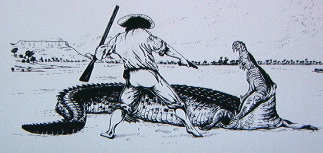 In the early days of exploration, mail and supplies were brought to the isolated cattle stations via river steamers and schooners. . These steamers even played a role in the exporting of cattle from this region to Australian and Asian markets. Treacherous shoals, sandbars and tidal flows in the crocodile infested waters of the Victoria River made these trips anything but tame. Imagine navigating a schooner in changing river tides with a boatload of wild cattle!
Charles Mugg, skipper of the Wai Hoi, was a colorful character. The Wai Hoi, a Chinese built, ‘two dragon’ steamer (in reference to the power she produced), was under contract to ship mail and general cargo. As legends go, the Wai Hoi had an unreliable engine, her skipper was rarely sober, and the cockroaches aboard were infamous. One sailor on the crew remarked, “These ‘whiskers’ were a joy to us. They forecasted meal hours as a barometer forecasts a storm.”
Tales of early life in the Victoria River region provide us with a glimpse into a wild and woolly era gone by.
Suggested activities: Examine the quotes contained in the preceding update. ‘Translate’ them into modern day word usage. What are these quotes trying to tell us of life 150 years ago? Why are the use of quotations important when retelling a story? How do they reflect the early history of an area?
April
]]>
In the early days of exploration, mail and supplies were brought to the isolated cattle stations via river steamers and schooners. . These steamers even played a role in the exporting of cattle from this region to Australian and Asian markets. Treacherous shoals, sandbars and tidal flows in the crocodile infested waters of the Victoria River made these trips anything but tame. Imagine navigating a schooner in changing river tides with a boatload of wild cattle!
Charles Mugg, skipper of the Wai Hoi, was a colorful character. The Wai Hoi, a Chinese built, ‘two dragon’ steamer (in reference to the power she produced), was under contract to ship mail and general cargo. As legends go, the Wai Hoi had an unreliable engine, her skipper was rarely sober, and the cockroaches aboard were infamous. One sailor on the crew remarked, “These ‘whiskers’ were a joy to us. They forecasted meal hours as a barometer forecasts a storm.”
Tales of early life in the Victoria River region provide us with a glimpse into a wild and woolly era gone by.
Suggested activities: Examine the quotes contained in the preceding update. ‘Translate’ them into modern day word usage. What are these quotes trying to tell us of life 150 years ago? Why are the use of quotations important when retelling a story? How do they reflect the early history of an area?
April
]]>
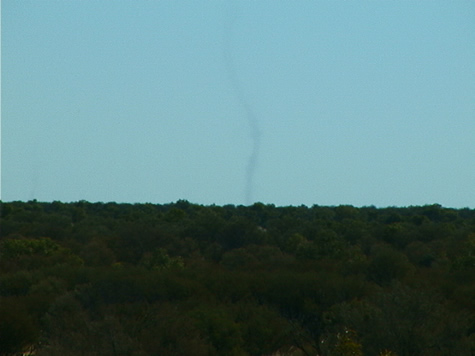 In the flatter desert country, the wind whips across the open land,
creating miniature whirlwinds, or willy-willies. A traditional story
from Areyonga, in the Northern Territory, incorporates a willy-willy,
which the tribe calls a kupi-kupi, and warns of the danger of snakes.
It also tells of the importance of family, teaches a way to cure fever,
and warns of the dangerous nature of snakes. It goes like this:
“There was once a girl who loved to chase the kupi-kupis as far as she
could run. One day an enormous kupi-kupi came, and as she tried to
chase it, it lifted her off the ground and away. When the girl’s parents came
home they found she was gone, and suspected what had happened. They
were so sorrowful that they moved far away to other lands.
The witch doctor thought maybe the wanampi – the water snake – had
taken her, and sent a man out to search for her by the waterhole.
She was there where the kupi-kupi had dumped her – sitting by the
waterhole and hitting the ground with her story stick telling stories
to herself. She was lonely for her country. She saw the man that the witch
doctor sent waving to her, and walked towards him, but the wanampi
pulled her back. She disappeared into the water.
The next day the man returned, and found her sitting near the sleeping
wanampi. He waved again. Quietly, the girl got up and ran to the man
while the wanampi slept. He began to carry her back to her parents.
When wanampi woke to find the girl had gone, he was so angry that he
sent a flood over the country to find her. When the flood couldn’t find
her it returned to the waterhole.
The man and girl travelled a long way, until they came to a place where
all the people were living. Her mother and father were delighted to see
her, but the girl was very sick and sweating.
Her mother made a fire, and piled leaves on to make smoke. Then she put
the leaves on her daughter’s body. The girl became well again and
married the man
Write your own dreaming story. Try including some of the following: Why
is your home place the way it is? What are the birds saying as they
sing in the mornings? How do you celebrate happy times? How do you cope with
sorrowful times? What are the best things to play with in your
favourite space? What dangers are found near where you live?
bel
]]>
In the flatter desert country, the wind whips across the open land,
creating miniature whirlwinds, or willy-willies. A traditional story
from Areyonga, in the Northern Territory, incorporates a willy-willy,
which the tribe calls a kupi-kupi, and warns of the danger of snakes.
It also tells of the importance of family, teaches a way to cure fever,
and warns of the dangerous nature of snakes. It goes like this:
“There was once a girl who loved to chase the kupi-kupis as far as she
could run. One day an enormous kupi-kupi came, and as she tried to
chase it, it lifted her off the ground and away. When the girl’s parents came
home they found she was gone, and suspected what had happened. They
were so sorrowful that they moved far away to other lands.
The witch doctor thought maybe the wanampi – the water snake – had
taken her, and sent a man out to search for her by the waterhole.
She was there where the kupi-kupi had dumped her – sitting by the
waterhole and hitting the ground with her story stick telling stories
to herself. She was lonely for her country. She saw the man that the witch
doctor sent waving to her, and walked towards him, but the wanampi
pulled her back. She disappeared into the water.
The next day the man returned, and found her sitting near the sleeping
wanampi. He waved again. Quietly, the girl got up and ran to the man
while the wanampi slept. He began to carry her back to her parents.
When wanampi woke to find the girl had gone, he was so angry that he
sent a flood over the country to find her. When the flood couldn’t find
her it returned to the waterhole.
The man and girl travelled a long way, until they came to a place where
all the people were living. Her mother and father were delighted to see
her, but the girl was very sick and sweating.
Her mother made a fire, and piled leaves on to make smoke. Then she put
the leaves on her daughter’s body. The girl became well again and
married the man
Write your own dreaming story. Try including some of the following: Why
is your home place the way it is? What are the birds saying as they
sing in the mornings? How do you celebrate happy times? How do you cope with
sorrowful times? What are the best things to play with in your
favourite space? What dangers are found near where you live?
bel
]]>